Table of Contents
New Zealand is one of the best places in the world for wildlife lovers. Because the country was isolated for millions of years, many animals evolved in ways you will not see anywhere else. Some cannot fly, some only come out at night, and others live on remote islands or deep in ancient forests.
If you enjoy nature experiences that feel truly special, spotting one of New Zealand’s rare animals can become the highlight of your trip. The good news is that you do not always need to be a scientist or join an expensive expedition to see them. With patience, good timing, and the right location, you can find many of these incredible creatures yourself.
This guide takes you through 10 rare New Zealand animals and the places where you have the best chance of seeing them in the wild.
Quick Summary Table 🐾
| Rare Animal | Best Place to See It | Best Time to Visit | Chance of Spotting |
|---|---|---|---|
| Kiwi | Stewart Island | Night | Moderate to High |
| Kakapo | Codfish Island access programs | Seasonal | Very Rare |
| Takahe | Fiordland and Tiritiri Matangi | Year round | Moderate |
| Hector’s Dolphin | Akaroa | Summer | High |
| Yellow Eyed Penguin | Otago Peninsula | Evening | Moderate |
| Tuatara | Zealandia Wellington | Warm evenings | Moderate |
| Kea | Arthur’s Pass | Year round | High |
| New Zealand Fur Seal | Kaikōura | Winter and spring | High |
| Weta | Zealandia and forest reserves | Night | Moderate |
| Maui Dolphin | West Coast North Island | Summer | Very Rare |
How We Ranked These Animals 🌿
We ranked these rare New Zealand animals using several important factors:
- How unique the animal is to New Zealand
- How rare or endangered the species has become
- Your realistic chances of seeing one
- Accessibility of the viewing location
- Overall wildlife experience for travellers
- Ethical and respectful wildlife viewing opportunities
- Seasonal reliability for sightings
1. Kiwi in Stewart Island 🥝
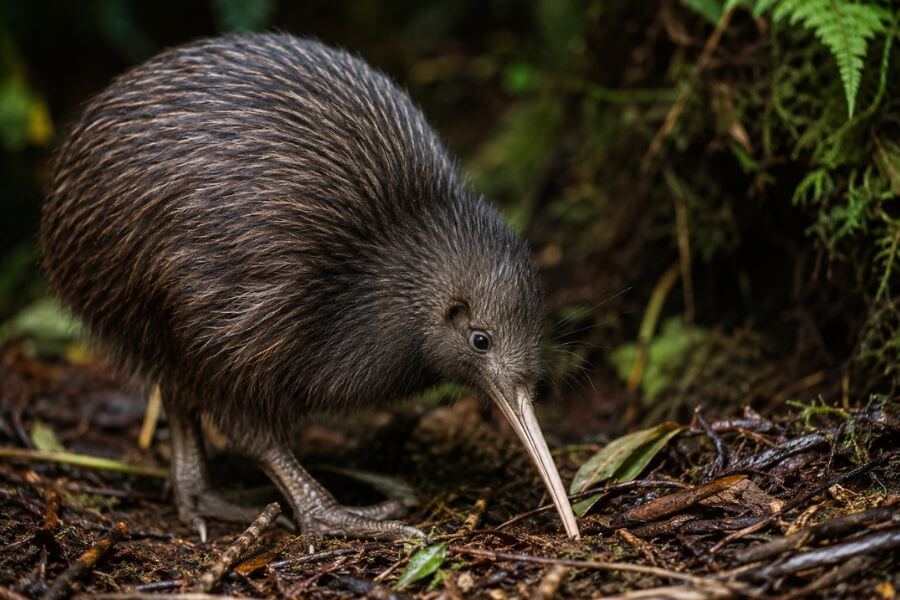
The kiwi is probably New Zealand’s most famous animal, but seeing one in the wild is far harder than most visitors expect. These shy, flightless birds are nocturnal and excellent at hiding in dense bushland.
Your best chance to spot a kiwi naturally is on Stewart Island, also known as Rakiura. Unlike many places where you need a guided sanctuary tour, kiwis here sometimes wander close to walking tracks and beaches after dark.
The Rakiura Track area is especially well known for kiwi sightings. You may hear rustling leaves before you actually see one. The sound of their long beaks digging through the forest floor is surprisingly loud in the quiet night air.
To improve your chances:
- Use a red-filtered torch
- Stay very quiet
- Avoid sudden movements
- Walk slowly after sunset
Seeing a kiwi in the wild feels unforgettable because it is one of the few truly natural encounters left with this iconic bird.
2. Kakapo on Protected Islands 🦉
The kakapo is one of the rarest parrots on Earth. It is large, flightless, nocturnal, and critically endangered. At one point, scientists feared it would disappear completely.
Today, almost all kakapo live on heavily protected offshore islands such as Codfish Island. Public access is extremely limited, which makes sightings incredibly rare for ordinary travellers.
Even though you are unlikely to casually encounter one, special conservation programs and occasional public events sometimes allow limited viewing opportunities. Learning about the kakapo story has become a major wildlife experience in itself.
What makes the kakapo so fascinating is its personality. People who work with them often describe them as curious and gentle birds with surprisingly human behaviour.
Even if you never see one directly, many wildlife centres and museums across New Zealand share the recovery story of this remarkable species.
3. Takahe in Fiordland 🏔️
The takahe was once believed extinct until a small surviving population was rediscovered in Fiordland in 1948. This large blue and green bird cannot fly and survives mainly through intense conservation efforts.
Today, you can sometimes spot takahe in protected locations, including:
- Fiordland National Park
- Tiritiri Matangi Island
- Te Anau Bird Sanctuary
The Te Anau sanctuary is one of the easiest places for visitors to see them up close. The birds are surprisingly large and colourful, with bright red beaks and deep blue feathers that stand out beautifully against alpine grasslands.
Takahe sightings feel special because the species came so close to disappearing forever. Every successful breeding season is an important conservation victory.
4. Hector’s Dolphin in Akaroa 🌊
Hector’s dolphins are among the smallest dolphins in the world and are found only in New Zealand waters. Their rounded dorsal fins make them easy to recognise compared with other dolphin species.
Akaroa Harbour on the South Island is one of the best places to see them. During the summer, dolphins often swim close to boats, kayaks, and even swimmers.
Unlike many wildlife experiences that require luck, Hector’s dolphin sightings here are relatively reliable. Calm weather improves visibility, especially during morning tours.
These dolphins are playful and fast-moving, which makes the experience exciting for photographers and families alike.
Because the species is endangered, responsible tourism matters greatly. Keeping respectful distances helps protect their fragile population.
5. Yellow Eyed Penguin on the Otago Peninsula 🐧
The yellow-eyed penguin is one of the rarest penguin species in the world. Known locally as hoiho, these shy birds are very different from the crowded penguin colonies many people imagine.
The Otago Peninsula near Dunedin gives you one of the best opportunities to see them returning from the sea in the evening.
Unlike little blue penguins, yellow-eyed penguins prefer privacy. They nest in hidden coastal vegetation rather than large noisy groups.
The best viewing experiences usually happen around sunset when the birds slowly climb rocky beaches and head back to their nests after feeding offshore all day.
Watching them waddle through tall grass while sea mist rolls in creates one of New Zealand’s most peaceful wildlife moments.
6. Tuatara at Zealandia Wellington 🦎
The tuatara looks like a lizard, but it actually belongs to an ancient reptile group that existed during the age of dinosaurs. It is one of the most scientifically important animals in New Zealand.
You can find tuatara in protected sanctuaries such as Zealandia in Wellington. Warm evenings provide the best chance of seeing one emerge from its burrow.
These reptiles move slowly and often stay completely still for long periods, which means you need patience to spot them.
What makes the tuatara remarkable is how ancient it feels. Seeing one can feel like stepping back into prehistoric times.
Because they survive mostly in predator-free areas, sanctuaries have become essential for protecting their future.
7. Kea in Arthur’s Pass ⛰️
The kea is the world’s only alpine parrot and one of the smartest birds you will ever encounter. These cheeky birds are famous for opening bags, stealing food, and investigating parked cars.
Arthur’s Pass in the South Island is one of the best places to see them. Kea often gather around mountain car parks and walking tracks, especially in cooler weather.
Although they are easier to find than many animals on this list, kea are still considered endangered due to habitat threats and past hunting.
Their intelligence is what makes encounters memorable. They are curious, social, and completely fearless around humans.
If you stop for photos in alpine areas, do not be surprised if a kea lands nearby to inspect your backpack.
8. New Zealand Fur Seals in Kaikōura 🦭
New Zealand fur seals once faced severe hunting pressure, but populations have slowly recovered along parts of the coastline.
Kaikōura is one of the best places to watch them naturally. Seals rest on rocky shores, swim close to the coast, and sometimes appear surprisingly relaxed around people.
Winter and spring are particularly rewarding because seal pups can often be seen playing near shallow pools.
Unlike some wildlife experiences that require long hikes, many Kaikōura viewing spots are easy to access by car or short coastal walks.
Early morning visits usually offer quieter conditions and better photography opportunities.
9. Giant Weta in Forest Sanctuaries 🪲
The giant weta is one of the heaviest insects on Earth. While many visitors initially find them intimidating, they quickly become fascinating once you learn more about them.
Weta are mostly nocturnal and hide during the day, so evening sanctuary walks give you the best chance of spotting one.
Good locations include:
- Zealandia
- Predator-free island sanctuaries
- Native forest reserves
Some giant weta species are larger than a sparrow, which surprises many travellers seeing them for the first time.
Despite their appearance, they are harmless and play an important role in New Zealand’s ecosystem.
10. Maui Dolphin on the North Island West Coast 🌅
The Maui dolphin is the rarest dolphin species in the world. Only a very small population remains along the west coast of the North Island.
Because sightings are uncommon, seeing one in the wild is considered extremely lucky. However, areas near Taranaki and Manukau Harbour occasionally report sightings during calmer summer conditions.
Maui dolphins are closely related to Hector’s dolphins but are even rarer and more protected.
If you hope to see one, patience is essential. Wildlife cruises sometimes monitor the area, but there are never guarantees.
Even knowing these dolphins still survive in the wild makes the coastline feel special.
Conclusion 🌏
New Zealand’s rare animals are part of what makes the country so extraordinary. From tiny dolphins and ancient reptiles to flightless birds found nowhere else, each species tells a story about survival and isolation.
What makes these wildlife experiences memorable is not just the animals themselves, but the landscapes around them. You might spot a kiwi beneath rainforest trees, watch penguins return through coastal mist, or hear kea calling across snowy mountains.
The best wildlife encounters happen when you travel slowly, stay patient, and respect the environment. Even a brief glimpse of one of these rare animals can become a lasting travel memory.
Frequently Asked Questions ❓
What is the rarest animal in New Zealand?
The kakapo and Maui dolphin are considered among the rarest animals in New Zealand. Both species have very small populations and are heavily protected through conservation programs.
Can you see rare New Zealand animals without a tour?
Yes, several species can be seen independently. Places like Stewart Island, Kaikōura, and Arthur’s Pass offer realistic opportunities for self-guided wildlife viewing if you visit at the right time.
What time of year is best for wildlife spotting in New Zealand?
Spring and summer are generally the best seasons because weather conditions are milder and many animals are more active. However, some species, like seals, can also be excellent to watch during winter.
Are New Zealand wildlife sanctuaries worth visiting?
Absolutely. Sanctuaries protect many endangered animals and often provide your best chance of seeing species that are difficult to find in the wild.
How can you watch wildlife responsibly in New Zealand?
Keep a respectful distance, avoid feeding animals, stay quiet, follow local rules, and never block an animal’s path. Responsible viewing helps protect endangered species and their habitats.