Key Takeaways
- What it means: Upcycled beauty uses leftover food, wood, and plant parts that would usually go to waste. Instead of tossing them, companies turn them into high-quality skincare and hair products.
- Why it matters: It saves water, protects land, and lowers green-house gases by keeping trash out of landfills.
- What to look for: Coffee grounds, fruit seeds, citrus peels, and wood pulp are some of standard ingredients you will see on the label.
- Safe and clean: These ingredients go through intense cleaning and testing. They are just as clean, safe, and powerful as traditional ingredients.
Imagine making a morning smoothie. You squeeze out the fresh juice from an orange and throw the peel into the trash. Now, picture thousands of people doing the exact same thing every single day. That is a massive pile of fruit peels heading straight for the local landfill. But what if those exact peels could actually make your skin glow? Welcome to the world of upcycled beauty, where yesterday’s food waste becomes tomorrow’s favorite skincare product.
Decoding Upcycled Beauty
To truly understand this trend, you need to look at how we make things. For a long time, the beauty world followed a straight line. Companies took new plants from the earth, turned them into oils or creams, and consumers threw away the bottle when it was empty. The leftovers from the fields or factories were simply tossed aside.
Upcycling changes that path into a circle. It takes items that people think are useless and gives them a second life. In the beauty world, this means using the leftovers from food production, juice factories, and lumber yards to create premium beauty products.
Upcycling Versus Recycling
Many people mix up these two words, but they are very different. Here is a simple breakdown to help you see the difference:
- Recycling breaks an item down to its basic form to make the same thing again. Think of melting a plastic water bottle to make a new plastic bottle. It often lowers the quality of the material over time.
- Upcycling takes something that people view as waste and turns it into something of much higher value. You do not break it down into a cheap material. Instead, you elevate it. Turning discarded coffee grounds into an expensive face oil is upcycling.
The Scale of Global Waste
Every single year, the world wastes billions of tons of perfectly good food. Fruits get tossed because they look a little bumpy or weird. Outer leaves get chopped off before vegetables hit the grocery store shelves. When this food rots in a landfill, it creates a dangerous gas called methane. Methane traps heat in our atmosphere, which warms up our planet. By stepping in and using these food scraps before they rot, the beauty industry helps slow down this warming process.
The Journey from Scrap to Skin
You might wonder how a soggy pile of fruit pulp turns into a smooth, luxury face cream. It does not happen by accident. It takes a lot of science and careful planning to make sure these ingredients are ready for your bathroom counter.
Finding the Right Source
The process always starts with partnerships. Beauty companies work closely with local farms, juice brands, and food factories. They find out what leftovers these businesses produce in large amounts. For example, a factory that makes apple juice will have tons of wet apple mash left over at the end of the day. A coffee shop will have buckets of used grounds. These are the perfect raw materials for sustainable beauty.
Cleaning and Sorting
Once the beauty company collects the scraps, the real work begins. The raw materials must be perfectly clean. Workers sort through the items to remove anything that does not belong. Next, the scraps go through a deep cleaning process. This step removes any dirt, wild yeast, or unwanted bugs.
High-Tech Extraction
After cleaning, scientists use special machines to pull out the active nutrients. They might use pressure, gentle heat, or natural liquids to separate the beneficial parts from the bulky fiber. Here is what they look for:
- Antioxidants: These are natural shields that protect your skin from pollution and sun damage.
- Fatty acids: These natural oils keep your skin soft, hydrated, and strong.
- Vitamins: These natural building blocks help your skin repair itself and look bright.
Safety Testing
This is the most important step of all. Before any ingredient touches your face, it goes through intense testing in a laboratory. Scientists check for bacteria, mold, and heavy metals. They make sure the ingredient is completely stable, meaning it will not spoil or change color while sitting on a shelf in a store.
Top Upcycled Ingredients to Watch
The list of upcycled ingredients grows longer every day as scientists find new ways to reuse waste. Here are the most common and powerful ingredients you can find in stores right now.
Spent Coffee Grounds
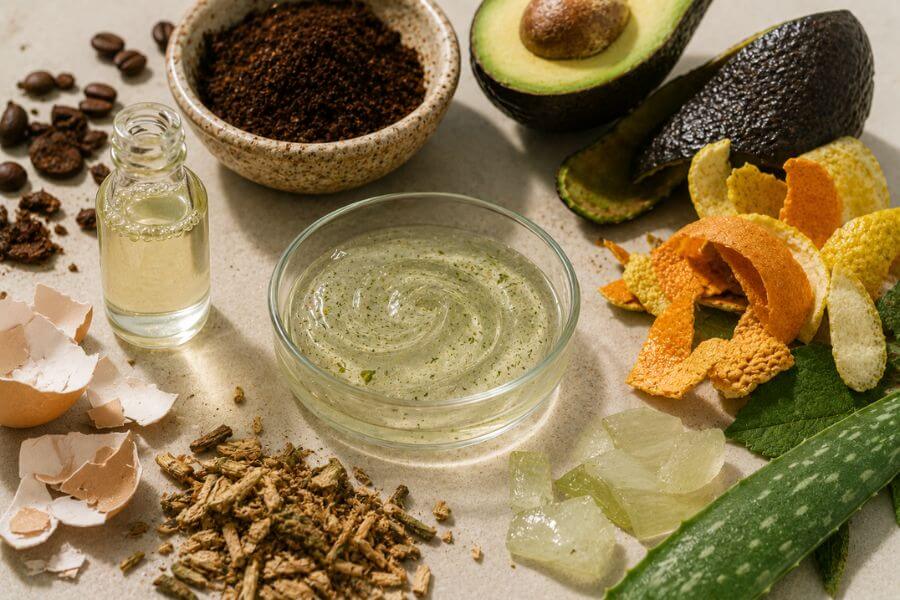
Coffee is one of the most popular drinks on the planet, which means we produce millions of pounds of used coffee grounds daily. Most of these grounds end up in the trash. However, coffee grounds are packed with caffeine and rich oils even after brewing.
When used in skincare, caffeine wakes up tired skin. It can shrink the look of dark circles under your eyes and puffiness in the morning. The gritty texture of the grounds also makes them an excellent natural body scrub that removes dead skin cells without harming the ocean.
Discarded Fruit Seeds
When factories make fruit juices, jams, and jellies, they usually strain out the seeds. Seeds from raspberries, blueberries, strawberries, and cranberries are often seen as a nuisance. But inside those tiny seeds is a goldmine of nutrition.
Oil pressed from upcycled fruit seeds is incredibly lightweight and absorbs into your skin quickly. It provides a massive burst of moisture without clogging your pores. These oils are also full of vitamin C, which helps fade dark spots and gives you a radiant complexion.
Citrus Peels and Pulp
Think about how many lemons, limes, oranges, and grapefruits get squeezed for lemonade or juice bars. The thick outer peels are usually thrown out. This is a huge waste because citrus peels contain powerful essential oils and natural brighteners.
Extracts from upcycled citrus peels help balance oily skin and clear up breakouts. They also give beauty products a fresh, uplifting scent without the need for artificial perfumes that can irritate sensitive skin.
Broken Rice and Oat Hulls
When farmers process grains like rice and oats for food, many grains break into tiny pieces. Grocery stores will not buy broken rice because it looks imperfect. Additionally, the tough outer shell of the oat, called the hull, is removed and discarded.
The beauty industry saves these grains and grinds them into ultra-fine powders. Upcycled rice and oat powders are amazing for soothing red, irritated, or itchy skin. They act like a soft blanket that calms down inflammation and locks in deep moisture.
Wood Pulp and Sawdust
The lumber industry produces tons of leftover wood shavings, bark, and sawdust when making furniture or building materials. Instead of letting this wood rot or burning it, companies can extract a special compound called betulin from the bark.
Wood extracts are fantastic for anti-aging skincare. They help firm up loose skin and reduce the appearance of fine lines. Some wood pulps are also turned into natural thickeners that give lotions a creamy texture.
Environmental Benefits of Upcycling
Choosing upcycled beauty is not just a win for your skin. It is also a massive win for our planet. When you buy these products, you are actively helping solve several major environmental problems at once.
Saving Precious Water
It takes an enormous amount of water to grow crops from seed. When factories throw away half of a fruit crop because they only want the juice, all the water used to grow that discarded pulp is wasted. By using the leftovers, the beauty industry maximizes every single drop of water that went into farming that plant.
Reducing the Need for New Land
As the demand for beauty products grows, companies often need more land to grow special ingredients. This can lead to deforestation, which means cutting down wild forests to make room for farms. Upcycling cuts down this need. Instead of clearing out a new forest to plant a field of flowers, a brand can simply use the tomato skins left over from a nearby ketchup factory.
Lowering Carbon Footprints
Shipping raw materials around the globe uses a lot of fuel, which releases carbon dioxide into the air. Many upcycled ingredients are sourced locally from existing food factories. This short journey means fewer delivery trucks on the road and less pollution in the air.
Supporting Local Farmers
Upcycling creates a brand-new way for farmers to make money. Instead of paying fees to throw away their crop waste, they can sell their pumpkin seeds or fruit peels to beauty brands. This extra income helps small, family farms stay business and invest in better, eco-friendly farming tools.
The Science of Upcycled Ingredients
Some people worry that upcycled ingredients are less powerful than fresh ingredients. This is a common misunderstanding. In fact, many upcycled ingredients actually perform better than traditional ones because of how they are processed.
Concentrated Power
When a fruit is squeezed for juice, the water leaves the pulp. The remaining skin and seeds hold a highly concentrated amount of nutrients. This means the upcycled oil pressed from those seeds can actually have a higher percentage of antioxidants than oil pressed from a whole, fresh fruit.
Stability and Shelf Life
Natural beauty products can sometimes spoil quickly because they lack strong artificial preservatives. However, upcycled extracts from items like green tea leaves or rosemary twigs are naturally stable. They contain built-in defense systems that keep the product fresh for a long time without irritating your skin.
Comparing Cosmetic Ingredients
To see how upcycled ingredients fit into your daily routine, it helps to compare them to other types of ingredients you see in the store aisle.
| Ingredient Type | Where It Comes From | Environmental Impact | Price Point |
| Conventional | Created in a laboratory using petroleum or chemicals | High pollution and chemical waste | Low to medium |
| Standard Organic | Grown on special farms without pesticides | Medium due to land and water use | High |
| Upcycled Natural | Rescued from food and wood waste streams | Extremely low because it reuses waste | Medium |
Why Upcycled Wins
Conventional ingredients often rely on oil drilling, which harms the earth. Organic ingredients are cleaner, but they still require a lot of land and water to grow. Upcycled ingredients sit in the sweet spot. They give you all the clean benefits of organic plants without taking up new space on the planet.
Identifying Authentic Upcycled Products
As upcycled beauty becomes more popular, some companies might try to make their products sound more eco-friendly than they actually are. This is called greenwashing. You need to know how to spot the real deals when shopping.
Look for Specific Stories
Real upcycled brands are proud of their ingredients. They will not just write natural on the front of the bottle. They will tell you exactly where the waste came from. Look for phrases like made from rescued coffee grounds or formulated with upcycled plum stones. If a brand cannot tell you where their ingredients come from, they might not be truly upcycled.
Check the Ingredient List
Flip the bottle over and read the back label. True upcycled ingredients look just like standard botanical ingredients on the list. For example, you might see Citrus Limon Peel Extract or Coffea Arabica Seed Powder. The magic is in how the company sources those names, so look for a small asterisk or note explaining that the ingredient is upcycled.
Trustworthy Seals and Certifications
Third-party groups inspect beauty brands to make sure they are telling the truth. Look for logos from organizations like the Upcycled Food Association. When you see their official stamp on a box, you know the ingredients have been checked and verified by outside experts.
Integrating Upcycled Beauty into Your Routine
You do not need to throw away all your current skincare products to make a difference. You can slowly introduce upcycled items into your daily habits step by step.
Start with Cleansers and Scrubs
The easiest way to try upcycled beauty is with products you wash off. An upcycled coffee body scrub or a face wash made with citrus extracts is a great introduction. These products feel amazing on your skin and show you that rescued ingredients perform just as well as traditional ones.
Move to Leave-On Moisture
Once you feel comfortable, look for upcycled face oils and moisturizers. A face oil made from raspberry seeds can replace your usual nighttime lotion. These oils seal in moisture while you sleep and let the concentrated antioxidants repair your skin overnight.
Do Not Forget Hair Care
Upcycling is not just for your face. Many hair care brands now use upcycled ingredients too. Shampoo bars made with leftover apple cider vinegar can remove heavy buildup from your scalp. Hair conditioners made with wood pulp extracts can smooth down frizz and add a healthy shine to your hair.
Overcoming Common Concerns
Change can feel a bit scary, and it is natural to have questions when trying a new type of beauty product. Let us address some of the worries people often have when they first hear about upcycled ingredients.
Will It Smell Like Old Food?
This is a very common question. People worry that a cream made from food scraps will smell sour or like a kitchen trash can. The answer is a clear no. The cleaning and extraction process removes all the components that could cause a bad smell. The final ingredient is pure and clean. If a product has a scent, it comes from the natural, fresh oils of the plant, like a bright hint of orange or a cozy note of coffee.
Is It Safe for Sensitive Skin?
Yes, upcycled ingredients are totally safe for sensitive skin types. In fact, because they are so natural, they often cause fewer reactions than heavy chemical perfumes or synthetic dyes. Ingredients like upcycled oats are famous for calming down redness and soothing skin that feels irritated or angry.
Does It Cost More?
When sustainable beauty first started, it could be quite expensive. Today, that is changing fast. Because upcycled ingredients use materials that factories were going to throw away, the raw materials are often very affordable. This helps beauty brands keep their prices fair and competitive with standard drugstore products.
The Future of Sustainable Beauty
The upcycled movement is not just a quick trend that will disappear next year. It is the future of how all consumer goods will be made. As technology gets better, scientists will find ways to upcycle even more unusual items.
Expanding Beyond Food
In the future, we will see ingredients sourced from places outside the food industry. For example, scientists are looking at ways to take wastewater from flower flower shops or herbal tea factories and pull out the remaining plant nutrients. We might also see beauty products made from the leftovers of seaweed farming or mushroom cultivation.
Zero-Waste Packaging
True sustainable beauty does not stop with the ingredients inside the bottle. Brands are now looking at the containers themselves. We are starting to see bottles made from upcycled olive pits, coconut shells, and wood waste. This means the entire product, from the cream inside to the jar outside, comes from rescued materials.
A Shift in Mindset
The biggest change will be in how we think about waste. Instead of looking at a pile of fruit skins or wood shavings as trash, the next generation will look at them as valuable building blocks. This shift will help protect our forests, conserve our water, and keep our planet clean and beautiful for a long time to come.
Frequently Asked Questions
Are upcycled ingredients clean and hygienic?
Yes, they are completely clean and hygienic. Before any upcycled ingredient enters a beauty product, it goes through a strict purification process in a laboratory. Workers scrub, heat, and filter the raw materials to remove all traces of dirt, bacteria, or impurities. The final ingredient is just as pure, sterile, and safe as any traditional cosmetic ingredient created in a lab or picked fresh from a field.
Can upcycled skincare products expire faster than regular products?
No, upcycled products do not spoil any faster than standard beauty items. They follow the exact same shelf-life rules as other cosmetics. Scientists test these formulations to ensure they stay stable for months or years. Many upcycled ingredients, like those from rosemary or tea leaves, actually contain natural preservatives that help keep the product fresh without the need for harsh chemicals.
How can I tell if a product is truly upcycled or just greenwashed?
To spot a truly upcycled product, look closely at the packaging for specific details instead of vague words like green or eco. A real upcycled brand will proudly share their sourcing story, naming the exact waste stream they rescued, such as salvaged avocado stones. You can also look for official stamps from independent organizations like the Upcycled Food Association, which verify the ingredients.
Are upcycled ingredients less powerful than fresh ones?
They are absolutely not less powerful. In fact, they can often be more potent than traditional ingredients. When a factory processes fruits or plants, the water is removed, leaving behind a highly concentrated paste or pulp. The skins and seeds hold a massive amount of vitamins and antioxidants. Extracting nutrients from this concentrated material results in an ingredient that is incredibly rich and effective for your skin.
Can people with nut or food allergies use upcycled food beauty products?
If you have a severe food allergy, you must always exercise caution and read the full ingredient list carefully. If a product uses upcycled almond shells or peanut oils, it can still trigger an allergic reaction. The upcycling process purifies the ingredients, but it does not always remove the specific proteins that cause allergies. Always do a patch test on a small area of your skin before applying any new product fully.