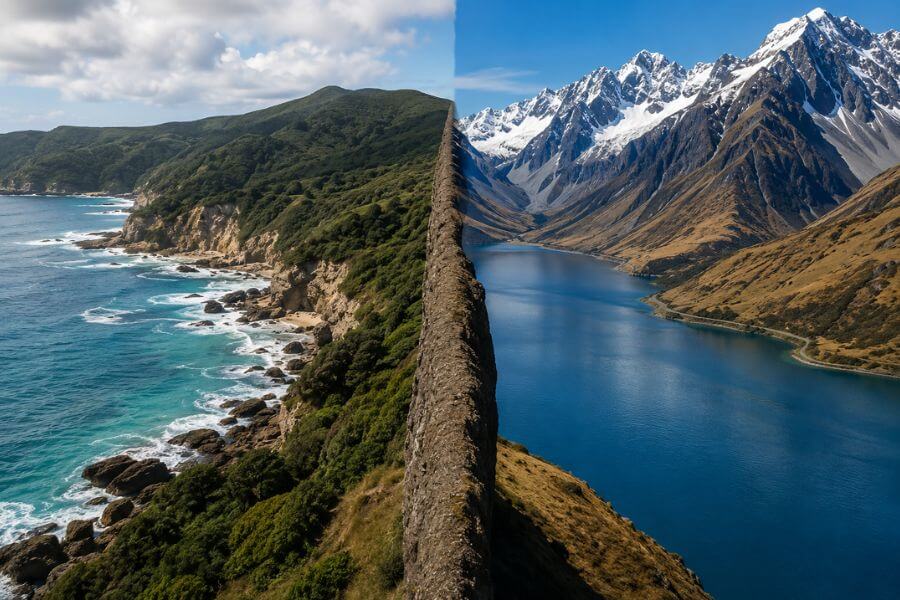
New Zealand may look small on a map, but its two main islands offer very different travel experiences. If you are planning a trip and wondering whether to spend more time on the North Island or the South Island, understanding the differences can help you create the perfect itinerary.
The North Island is known for its vibrant cities, rich Māori culture, geothermal wonders, and warmer climate. The South Island is famous for dramatic mountains, glaciers, outdoor adventures, and some of the world’s most spectacular road trips.
While both islands showcase the best of New Zealand, they appeal to different types of travellers. In this guide, you’ll discover the 10 biggest differences between travelling the North Island and South Island so you can decide which one suits your travel style best.
Quick Summary Table 📊
| Factor | North Island | South Island |
|---|---|---|
| Climate | Warmer and subtropical in many areas | Cooler with alpine conditions |
| Landscapes | Beaches, volcanoes, geothermal areas | Mountains, glaciers, fjords |
| Cities | Larger cities and urban attractions | Smaller towns and relaxed pace |
| Māori Culture | Strong cultural presence | Less prominent but still important |
| Adventure Activities | Surfing, caving, geothermal experiences | Skiing, hiking, bungee jumping |
| Wildlife | Marine life and bird sanctuaries | Penguins, seals, dolphins |
| Road Trips | Shorter driving distances | Longer scenic drives |
| Tourism Crowds | Busier around major cities | Spread out across natural attractions |
| Cost | Slightly more accommodation options | Often higher in remote regions |
| Overall Atmosphere | Energetic and cultural | Peaceful and nature-focused |
How We Ranked These Differences 🧭
We compared both islands based on the factors that most travellers notice during their trips:
- Natural scenery and landscapes
- Weather and climate
- Travel logistics
- Cultural experiences
- Adventure opportunities
- Wildlife encounters
- Popular tourist attractions
- Accommodation availability
- Driving experiences
- Overall travel atmosphere
1. Climate and Weather Conditions ☀️
One of the first things you’ll notice is the difference in climate.
The North Island enjoys warmer temperatures throughout much of the year. Areas such as Northland and the Bay of Plenty can feel almost subtropical during summer. Winters are generally mild, making it easier to travel year-round.
The South Island experiences a wider range of weather conditions. Summers are pleasant, but winters can be cold, especially around mountain regions. Snow is common in alpine areas, and temperatures can drop significantly overnight.
If you prefer beach holidays, warm weather, and outdoor activities without worrying too much about cold temperatures, the North Island may feel more comfortable. If you enjoy dramatic seasonal changes and snow-covered mountains, the South Island is hard to beat.
2. Landscapes and Scenery 🏔️
The scenery is perhaps the biggest difference between the two islands.
The North Island is filled with volcanic landscapes, geothermal areas, rolling farmland, forests, and beautiful coastlines. You can visit active geothermal parks, bubbling mud pools, volcanic peaks, and stunning beaches all within a relatively short distance.
The South Island is all about dramatic natural beauty. Towering mountain ranges, glaciers, crystal-clear lakes, fjords, and rugged coastlines dominate the landscape. Many travellers describe it as one giant outdoor postcard.
If you dream of alpine scenery and breathtaking mountain views, the South Island usually wins. If you prefer a mixture of beaches, forests, and volcanic landscapes, the North Island offers more variety.
3. Cities and Urban Experiences 🏙️
The North Island is home to New Zealand’s largest cities.
Auckland offers world-class dining, shopping, entertainment, and nightlife. Wellington provides a creative atmosphere, excellent museums, and a thriving café culture.
The South Island’s cities are generally smaller and quieter. Christchurch is the largest city on the island, while towns such as Queenstown and Nelson focus more on tourism and outdoor recreation.
Travellers who enjoy combining nature with city experiences often prefer the North Island. Those seeking a slower pace usually find the South Island more appealing.
4. Māori Culture and History 🪶
New Zealand’s Māori heritage is visible throughout both islands, but it is often more prominent in the North Island.
Places such as Rotorua provide opportunities to experience traditional performances, cultural villages, historic sites, and Māori cuisine. Many important historical locations are also found across the North Island.
The South Island has significant Māori history as well, but cultural attractions tend to be less concentrated and less visible to casual visitors.
If learning about New Zealand’s indigenous culture is a priority, the North Island generally offers more opportunities.
5. Adventure Activities and Outdoor Sports 🚵
Both islands are fantastic for adventure, but they specialise in different activities.
The North Island excels in surfing, geothermal adventures, black-water rafting, cave exploration, and coastal activities. The warmer climate supports outdoor adventures throughout much of the year.
The South Island is often considered New Zealand’s adventure capital. Activities include skiing, snowboarding, mountain climbing, heli-hiking, skydiving, bungee jumping, and multi-day hiking trails.
If your dream holiday revolves around extreme outdoor experiences, the South Island usually has the edge.
6. Wildlife Encounters 🐧
Nature lovers will find incredible wildlife on both islands.
The North Island is known for marine wildlife, bird sanctuaries, dolphins, and whale-watching opportunities in certain regions. Protected reserves also make it easier to spot native bird species.
The South Island is particularly famous for its penguins, fur seals, albatross colonies, and dolphins. Coastal areas often provide unforgettable wildlife encounters.
Travellers specifically interested in seeing penguins and large seabird colonies may find the South Island more rewarding.
7. Road Trip Experiences 🚗
Many visitors explore New Zealand by car or campervan.
The North Island offers shorter driving distances between major attractions. You can move between cities, beaches, and cultural sites without spending excessive time on the road.
The South Island is famous for its scenic drives. Routes pass through mountain passes, lakes, fjords, and vast open landscapes. The journeys themselves often become major highlights.
If you enjoy road trips where every corner reveals a stunning new view, the South Island delivers some of the best driving experiences in the world.
8. Tourist Crowds and Travel Pace 🚶
The travel atmosphere differs noticeably between the islands.
The North Island tends to feel busier because it contains the country’s largest population centres. Popular attractions around Auckland, Rotorua, and Wellington can become crowded during peak travel periods.
The South Island feels more spacious. Although destinations like Queenstown attract plenty of visitors, the island’s larger natural spaces help disperse crowds.
Travellers looking for a quieter, more peaceful holiday often appreciate the slower pace found across much of the South Island.
9. Accommodation and Travel Costs 💷
Costs vary depending on where and when you travel.
The North Island generally offers a wider range of accommodation options because of its larger population and bigger cities. This often creates more budget-friendly choices.
The South Island’s remote locations can sometimes lead to higher accommodation and transport costs, especially during peak tourist seasons and ski periods.
Budget-conscious travellers may find slightly more flexibility when travelling through the North Island.
10. Overall Travel Atmosphere ❤️
Perhaps the biggest difference comes down to the overall feeling of each island.
The North Island feels lively, diverse, and culturally rich. You can spend your mornings exploring geothermal parks, your afternoons on a beach, and your evenings enjoying city life.
The South Island feels wild, peaceful, and deeply connected to nature. It encourages slower travel, longer scenic drives, and more time spent outdoors.
Neither experience is better than the other. They simply offer different ways to experience New Zealand.
Conclusion 🎒
Choosing between New Zealand’s North Island and South Island is not easy because both offer incredible experiences. The North Island stands out for its warmer climate, cultural attractions, vibrant cities, and geothermal landscapes. The South Island shines with its majestic mountains, outdoor adventures, wildlife, and unforgettable scenery.
If you love culture, cities, beaches, and a warmer climate, you may prefer the North Island. If you dream of dramatic landscapes, hiking, skiing, and nature-focused travel, the South Island is likely the better fit.
Ideally, if your schedule allows, visit both islands. Together, they create one of the most diverse and rewarding travel experiences anywhere in the world.
Frequently Asked Questions ❓
Is the North Island or the South Island better for first-time visitors?
Both are excellent choices. First-time visitors who enjoy cities and cultural attractions often prefer the North Island, while nature lovers frequently favour the South Island.
How many days should I spend on each island?
A minimum of one week per island is ideal. Two to three weeks allows you to experience many of the highlights without feeling rushed.
Which island is better for campervan travel?
Both work well for campervan trips, but the South Island is often considered more scenic and is especially popular among road-trip enthusiasts.
Can you travel between the North Island and the South Island easily?
Yes. Ferries connect the two islands, and domestic flights are widely available if you want a quicker transfer.
Which island has the most famous attractions?
The North Island features attractions such as Rotorua and Auckland, while the South Island is known for Queenstown, Milford Sound, Mount Cook, and its alpine landscapes. The answer depends on the type of attractions you enjoy most.