Table of Contents
New Zealand is one of the best places in the world to explore volcanic landscapes. When you travel across the country, you quickly notice how the land feels alive. You see steaming vents, bright colored lakes, black lava rocks, and massive craters that tell stories of ancient eruptions. These natural features are not just beautiful; they are also part of an active geological system that continues to shape the land today. If you enjoy adventure, photography, or simply want to see something unique, volcanic areas in New Zealand offer unforgettable experiences. From the North Island’s geothermal wonders to the dramatic volcanic plateaus, you can explore a wide range of landscapes that feel almost otherworldly. In this guide, you will discover ten of the best volcanic landscapes in New Zealand that you should add to your travel list.
1. Tongariro Alpine Crossing in Tongariro National Park
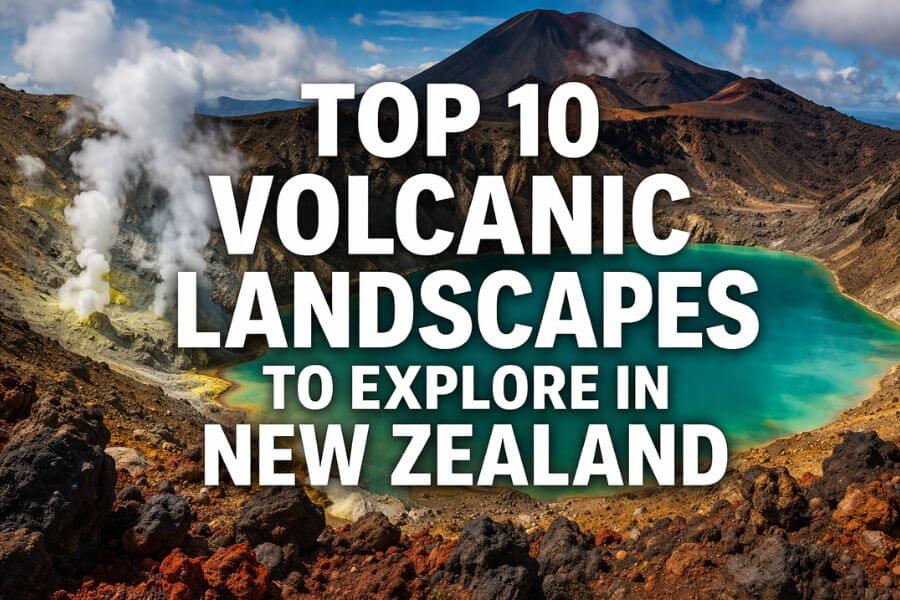
If you want a true volcanic adventure, the Tongariro Alpine Crossing is one of the best hikes you can do. This famous trail takes you through a dramatic landscape filled with craters, lava flows, and steaming vents. As you walk, you will see Mount Ngauruhoe, which looks like a perfect cone volcano, and Mount Tongariro with its rugged terrain.
The Emerald Lakes are one of the highlights, with their bright green color caused by volcanic minerals. The hike can be challenging, but the views make it worth every step. You should prepare well and check the weather conditions before going.
2. Rotorua Geothermal Area in Rotorua
Rotorua is one of the most active geothermal regions in the country. As soon as you arrive, you can smell sulfur in the air, which reminds you that the ground beneath is still active. You will find bubbling mud pools, steaming lakes, and powerful geysers.
Popular spots include:
- Wai-O-Tapu Thermal Wonderland
- Te Puia
- Hell’s Gate Geothermal Park
These areas offer easy access to geothermal features, making them perfect if you want to explore without long hikes.
3. White Island (Whakaari) near Bay of Plenty
White Island is one of the most active marine volcanoes in the world. Located offshore, it rises dramatically from the sea. While access is currently restricted due to safety concerns, it remains one of the most fascinating volcanic landscapes in New Zealand.
From a distance, you can still appreciate its smoking crater and rugged form. When conditions allow, guided tours offer a close look at the volcanic activity.
4. Mount Taranaki in Taranaki Region
Mount Taranaki is one of the most symmetrical volcanoes you will ever see. It rises alone from the surrounding plains, creating a striking and almost perfect shape. The mountain is surrounded by lush forest within Egmont National Park.
You can explore:
- Scenic walking tracks
- Waterfalls around the mountain
- Panoramic viewpoints
On clear days, the reflection of the mountain in nearby lakes creates a stunning view.
5. Taupō Volcanic Zone around Lake Taupō
The Taupō Volcanic Zone is one of the most active volcanic regions in the world. Lake Taupō itself sits in a massive caldera formed by a huge eruption thousands of years ago.
Here you can explore:
- Craters of the Moon geothermal area
- Hot springs and thermal pools
- Volcanic landscapes around the lake
This area gives you a deeper understanding of how powerful volcanic forces shaped New Zealand.
6. Rangitoto Island near Auckland
Rangitoto Island is a young volcano that formed only about 600 years ago. It is easily accessible by ferry from Auckland, making it a great day trip.
You can hike to the summit, where you get wide views of the city and the ocean. The island is covered in black lava rock and unique vegetation that has adapted to the harsh environment.
7. Waimangu Volcanic Valley in Rotorua
Waimangu Volcanic Valley is one of the youngest geothermal systems in the world. It was created after a volcanic eruption in the late 19th century.
As you walk through the valley, you will see:
- Steaming lakes
- Hot springs
- Unique plant life
The valley is peaceful and less crowded, making it a great place for a relaxed exploration.
8. Mount Ruapehu in Tongariro National Park
Mount Ruapehu is the largest active volcano in New Zealand. It is also a popular destination for skiing in winter and hiking in summer.
At the top, you can find a crater lake that sometimes changes color due to volcanic activity. The surrounding landscape is rugged and dramatic, with wide open views.
9. Tarawera Volcano in Bay of Plenty
Mount Tarawera is known for its powerful eruption in 1886, which changed the landscape dramatically. Today, you can walk along the volcanic rift created by that eruption.
The terrain features:
- Deep cracks in the earth
- Black volcanic rock
- Expansive views of nearby lakes
It is a unique place where you can clearly see the impact of volcanic forces.
10. Auckland Volcanic Field in Auckland
The city of Auckland sits on top of a volcanic field made up of more than 50 volcanoes. These volcanoes are now mostly dormant, but they still shape the city’s landscape.
Popular volcanic cones include:
- Mount Eden
- One Tree Hill
- Mount Victoria
You can easily visit these spots and enjoy views of the city while learning about its volcanic history.
Conclusion
Exploring volcanic landscapes in New Zealand is an experience you will not forget. Each location offers something different, from active geothermal areas to ancient volcanic mountains. As you travel through these regions, you will see how powerful natural forces have shaped the land over time. Whether you enjoy hiking, sightseeing, or learning about geology, these destinations give you a chance to connect with nature in a unique way. By visiting these volcanic landscapes, you not only see beautiful views but also gain a deeper understanding of the Earth’s dynamic processes.
Frequently Asked Questions
What is the best time to explore volcanic landscapes in New Zealand?
The best time is during spring and summer, from October to April, when the weather is warmer, and trails are safer. However, some areas like Rotorua can be visited all year.
Are volcanic areas in New Zealand safe to visit?
Most popular sites are monitored and safe to visit. You should always follow local guidelines and check for updates, especially in active areas.
Do you need a guide for volcanic hikes?
Some areas, like Tongariro Alpine Crossing, can be done on your own, but hiring a guide can improve safety and help you understand the landscape better.
What should you pack for volcanic exploration?
You should bring:
- Comfortable walking shoes
- Water and snacks
- Weather-appropriate clothing
- Sunscreen and a hat
Can you see active volcanic activity up close?
Yes, in places like Rotorua, you can safely see geysers, hot springs, and steaming vents. However, access to highly active volcanoes may be restricted for safety reasons.