Table of Contents
If you want to see the real New Zealand beyond the busy tourist towns and crowded campervan parks, staying in a DOC hut is one of the best ways to do it. The huts managed by New Zealand’s Department of Conservation give you access to remote valleys, alpine passes, native forests, and rugged mountain landscapes that most visitors never experience.
Unlike hotels or luxury lodges, DOC huts are simple, practical, and deeply connected to the outdoors. You cook your own meals, carry your own gear, and spend your evenings surrounded by hikers, trampers, hunters, and adventurers from all over the world. It is one of the most authentic back-country experiences you can have in New Zealand.
Some huts are historic and rustic with wood burners and basic bunk rooms. Others are larger and more modern, especially along famous Great Walks. No matter which one you choose, you get a chance to slow down and experience New Zealand’s wild landscapes properly.
In this guide, you will discover 10 DOC huts in New Zealand that offer unforgettable back-country adventures for hikers of different skill levels and travel styles.
Quick Summary Table 🧭
| DOC Hut | Region | Best For | Difficulty | Overnight Capacity |
|---|---|---|---|---|
| Mueller Hut | Aoraki/Mount Cook | Alpine views | Hard | 28 bunks |
| Routeburn Falls Hut | Fiordland/Otago | Great Walk scenery | Moderate | 48 bunks |
| Angelus Hut | Nelson Lakes | Mountain lakes | Moderate to hard | 28 bunks |
| Aspiring Hut | Mount Aspiring National Park | Beginner overnighter | Easy to moderate | 38 bunks |
| Pouakai Hut | Taranaki | Volcano sunrise views | Moderate | 16 bunks |
| Pinnacles Hut | Coromandel | Historic packhorse trails | Moderate | 80 bunks |
| Brewster Hut | Haast Pass | Classic alpine hike | Hard | 12 bunks |
| Blue Lake Hut | Nelson Lakes | Remote wilderness | Hard | 16 bunks |
| Cape Brett Hut | Northland | Coastal back-country experience | Moderate | 23 bunks |
| Luxmore Hut | Fiordland | Kepler Track adventure | Moderate | 54 bunks |
How We Ranked These DOC Huts 🥾
We compared these huts using several important factors that matter to travellers looking for a genuine back-country experience.
- Scenic beauty and surrounding landscapes
- Uniqueness of the hiking experience
- Accessibility for different fitness levels
- Hut atmosphere and overnight experience
- Wildlife and natural surroundings
- Historical or cultural significance
- Popularity among experienced trampers
- Overall adventure value
- Variety between coastal, alpine, forest, and volcanic environments
- Opportunities for sunrise, stargazing, and photography
1. Mueller Hut, Aoraki/Mount Cook National Park 🏔️
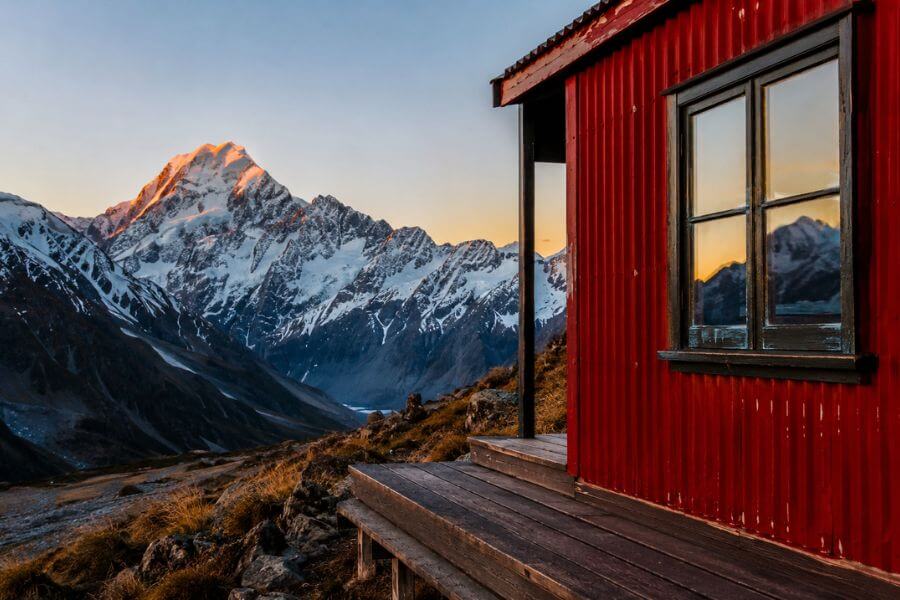
Mueller Hut is one of the most iconic alpine DOC huts in New Zealand. Sitting high above the Hooker Valley in the South Island, this bright red hut offers jaw-dropping views of glaciers, rocky peaks, and snow-covered mountains.
The hike to Mueller Hut is physically demanding. You climb thousands of steps before reaching steep alpine terrain, but the reward feels massive once you arrive. On a clear day, you can see deep into the Southern Alps and even watch avalanches rumbling across distant mountain faces.
Inside, the hut feels warm and social. Hikers often share stories while cooking dinner and watching the sunset through the large windows. If the weather stays clear overnight, the stars are incredible because there is almost no light pollution.
This hut is best for travellers who want a serious mountain adventure without needing advanced mountaineering skills.
2. Routeburn Falls Hut, Routeburn Track 💧
Routeburn Falls Hut sits beside roaring waterfalls and wide alpine valleys along one of New Zealand’s most famous Great Walks. The Routeburn Track combines dramatic mountain scenery with comfortable hut facilities, making it ideal if you want a classic DOC hut experience with slightly easier logistics.
The walk itself takes you through mossy forests, swinging bridges, and open alpine sections with huge panoramic views. The hut is modern compared to some backcountry huts, but it still gives you that remote feeling once the evening settles in.
One of the best parts about staying here is waking up early before the crowds begin hiking again. The valley feels peaceful and untouched in the soft morning light.
If you are new to multi-day hiking in New Zealand, this is one of the best introductions you can have.
3. Angelus Hut, Nelson Lakes National Park 🌄
Angelus Hut is famous for its stunning setting beside Lake Angelus, high in the mountains of Nelson Lakes National Park. The landscape here feels remote, dramatic, and completely wild.
You can reach the hut through several different hiking routes, including steep climbs and ridgeline tracks. The effort is worth it because the views around the lake are spectacular in every direction.
The hut itself is modern and comfortable, but the real highlight is the atmosphere outside. Sunrises here can turn the surrounding mountains bright orange and gold, while calm evenings create mirror reflections across the lake.
Many hikers say Angelus Hut feels like one of the most magical overnight experiences in New Zealand because of how isolated and peaceful the location feels.
4. Aspiring Hut, Mount Aspiring National Park 🌲
Aspiring Hut is a fantastic choice if you want a back-country hut experience without an extremely difficult hike. Located near Mount Aspiring National Park, the track follows a beautiful valley surrounded by mountains, rivers, and farmland.
The walk to the hut is relatively manageable for most people with decent fitness, which makes it popular among beginner trampers and families. Even though it is easier to access, the scenery still feels wild and authentic.
The hut has a strong mountaineering history and acts as a gateway for climbers heading deeper into the national park. Staying here gives you a chance to experience New Zealand’s outdoor culture in a relaxed and welcoming environment.
It is also a great option if you want to spend extra time exploring side hikes nearby.
5. Pouakai Hut, Taranaki 🌋
Pouakai Hut has become famous for its incredible views of Mount Taranaki reflected in the nearby tarns. The mountain’s symmetrical shape often reminds visitors of Mount Fuji in Japan.
The hike includes forest trails, boardwalks, and open alpine sections. Conditions can change quickly here, so good preparation is important even during summer.
The hut itself is relatively small, which creates a cosy atmosphere in the evenings. Many hikers wake before sunrise and walk to the tarns to watch the mountain light up with early morning colour.
Few DOC hut experiences combine volcanic scenery and photography opportunities as beautifully as Pouakai Hut.
6. Pinnacles Hut, Coromandel Peninsula 🚶
Pinnacles Hut is one of the most accessible and enjoyable back-country huts in the North Island. The trail follows an old packhorse route built during the kauri logging era, giving the walk a fascinating historical feel.
The track climbs gradually through lush forest before reaching rocky pinnacles with sweeping coastal views. Because the hut is large and comfortable, it is a popular overnight trip for both locals and international travellers.
Despite its popularity, the area still feels adventurous, especially if you climb the Pinnacles summit at sunrise. Watching the morning mist roll through the valleys is unforgettable.
This hut is perfect if you want a rewarding overnight hike without needing advanced hiking experience.
7. Brewster Hut, Haast Pass ❄️
Brewster Hut delivers one of the most rewarding alpine adventures in the South Island. The hike begins with a river crossing before climbing steeply through dense forest and open mountain terrain.
Once you reach the hut, you are surrounded by glaciers, waterfalls, and towering alpine peaks. The landscape feels raw and untamed, especially during changing weather conditions.
The hut itself is small and basic, which adds to the authentic wilderness atmosphere. Evenings here often feel quiet and remote because relatively few people make the climb compared to more famous Great Walk huts.
If you are chasing a true mountain backcountry experience, Brewster Hut deserves a place high on your list.
8. Blue Lake Hut, Nelson Lakes National Park 🛶
Blue Lake Hut sits beside one of the clearest lakes in the world. Reaching it requires a long and challenging hike, which means only committed trampers usually make the journey.
This is not a casual overnight trip. The terrain can be demanding, and weather conditions may change quickly. However, the reward is an extraordinary wilderness experience far from busy tourist routes.
The lake itself has remarkable clarity, and the surrounding mountains create an almost untouched atmosphere. Nights here feel deeply peaceful because of the extreme remoteness.
Blue Lake Hut is best for experienced hikers who want to experience the quieter side of New Zealand’s back-country network.
9. Cape Brett Hut, Northland 🌊
Cape Brett Hut offers something completely different from alpine DOC huts. Located along the rugged Northland coastline, this hut gives you ocean views, dramatic cliffs, and subtropical scenery.
The hike follows a narrow ridgeline track with constant coastal panoramas. Along the way, you may spot dolphins, seabirds, and distant islands scattered across the Bay of Islands.
The hut sits near the historic Cape Brett Lighthouse, adding a sense of isolation and history to the overnight stay. Falling asleep to the sound of crashing waves creates a memorable atmosphere that feels very different from inland forest or mountain huts.
If you want a coastal back-country adventure, this is one of the best options in the country.
10. Luxmore Hut, Kepler Track ⭐
Luxmore Hut is one of the highlights of the famous Kepler Track in Fiordland National Park. Perched high above Lake Te Anau, the hut provides incredible views across mountains, forests, and deep glacial lakes.
The climb to the hut is steady but achievable for most hikers with reasonable fitness. Along the way, you pass through a native beech forest before emerging above the treeline.
The hut is large and well equipped, yet it still captures the communal spirit that makes DOC hut culture so special. Evenings are often lively with travellers from around the world sharing meals and hiking stories.
Nearby caves and alpine ridges add extra adventure opportunities if you want to explore beyond the hut itself.
Conclusion 🔥
Staying in a DOC hut is one of the best ways to experience the real New Zealand. These huts place you directly inside the country’s most beautiful landscapes, far from busy roads and crowded attractions.
Whether you choose a challenging alpine climb like Mueller Hut, a coastal adventure at Cape Brett Hut, or a beginner-friendly overnight stay at Pinnacles Hut, every experience offers something unique. You get fresh mountain air, unforgettable scenery, and the chance to connect with New Zealand’s strong outdoor culture.
The beauty of DOC huts is their simplicity. You carry what you need, slow down, and enjoy the wilderness properly. For many travellers, these overnight stays become the most memorable part of their entire New Zealand trip.
Frequently Asked Questions 🏕️
Do you need to book DOC huts in advance?
Yes, many popular DOC huts require advance bookings, especially during summer and school holiday periods. Great Walk huts can sell out months ahead, while smaller back-country huts may operate on a first-come basis.
What should you bring to a DOC hut?
You should carry food, water, warm clothing, rain gear, a sleeping bag, cooking supplies, and a torch or headlamp. Most huts provide mattresses but not bedding.
Are DOC huts suitable for beginners?
Some huts are beginner-friendly, while others require strong fitness and alpine experience. Huts like Pinnacles Hut and Aspiring Hut are good starting points for first-time trampers.
Can you stay in DOC huts during winter?
Yes, but winter conditions in New Zealand can become dangerous quickly. Snow, ice, avalanches, and freezing temperatures are common in alpine regions, so proper preparation is essential.
Do DOC huts have electricity or phone reception?
Most DOC huts do not have reliable electricity or mobile coverage. Some larger Great Walk huts may have limited lighting or emergency communication systems, but you should expect a mostly off-grid experience.