Finding the right tinted sunscreen can feel like a guessing game. To save you time, here is the ultimate cheat sheet to getting that perfect match and seamless blend.
- Match your undertone: Look at your veins. Blue or purple means cool undertones. Green means warm undertones. If you see both, you have a neutral undertone.
- Know your skin type: Oily skin needs oily-absorbing matte formulas. Dry skin thrives with hydrating, dewy liquids. Sensitive skin loves mineral blocks like zinc oxide.
- Prevent the white cast: Deep skin tones should avoid high percentages of untinted zinc oxide. Look for iron oxides on the ingredient list to ensure the tint matches your rich color.
- Apply the correct amount: Use the two-finger rule. Stretch two lines of sunscreen across your pointer and middle fingers to get the full protection your face needs.
- Reapply without mess: Use a tinted mineral powder or a makeup sponge to dab fresh sunscreen over your skin every two hours when you are out in the sun.
| Skin Goal | Best Finish | Key Ingredient |
| Shine Control | Matte | Silica or Clay |
| Deep Glow | Satin or Dewy | Iron Oxides |
| Intense Moisture | Radiant | Hyaluronic Acid |
| Redness Calming | Natural | Centella or Aloe |
Shield and Glow: The Magic of Tinted Sunscreens
Sunscreen is the single most important step in your daily skin care routine. It keeps your skin healthy, blocks harmful rays, and stops dark spots from forming. But let us be honest. Old-school sunscreens often leave you looking like a friendly ghost. They can feel heavy, sticky, and leave a thick white layer that looks unnatural, especially on darker skin.
That is where tinted sunscreens save the day. They combine dependable sun protection with a hint of color. Think of it as a skin smoothie that guards your face while evening out your skin tone. It gives you a fresh look without the heavy feeling of thick foundation. Let us dive into how you can choose the perfect bottle for your unique face.
Decoding Your Skin Tone and Undertone
Choosing the right tint starts with knowing your skin on a deeper level. Skin tone is the surface color you see in the mirror, like light, medium, or deep. Undertone is the subtle hue underneath that surface. It never changes, even if you get a tan in the summer.
Finding your surface shade
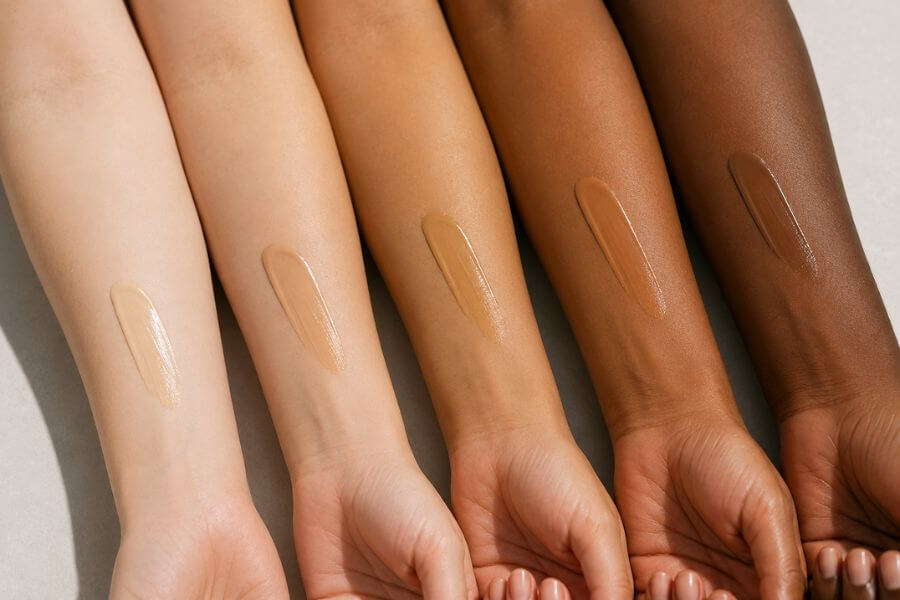
Surface shades generally fall into four main buckets. Light skin tones burn easily and usually look fair. Medium skin tones have a golden or olive hue and tan somewhat easily. Dark skin tones have a rich, deep color and rarely burn, but they still need protection from sun damage. Identifying your surface shade narrows down your choices immediately.
The quick vein test for undertones
Flip your wrists over and look at your veins under natural light. If your veins look blue or purple, you have a cool undertone. If they look green, your undertone is warm. If they look blue-green or match your skin color perfectly, you possess a neutral undertone. Matching your tint to your undertone stops your sunscreen from looking too gray or too orange.
The jewelry and white paper tests
If you are still unsure about your undertone, try the jewelry test. Does bright silver look amazing against your skin? You are likely cool-toned. Does yellow gold make your skin pop? You are probably warm-toned. You can also hold a pure white piece of paper next to your clean face in the mirror. If your face looks pink or blue next to the paper, you are cool. If you look yellow or golden, you are warm.
Why Formulas Differ for Every Shade Group
Not all sunscreens are made the same way. The physical blocks that stop sun rays can alter how the color looks on your skin. Understanding the science behind the shade helps you avoid common blending mistakes.
The science behind the white cast
Traditional mineral sunscreens use titanium dioxide and zinc oxide. These minerals sit on top of your skin to reflect sun rays like a shield. By nature, these powders are bright white. When you rub them onto light skin, they blend in fairly well. But when you rub them onto medium or deep skin, they look chalky and gray. This chalky look is what beauty experts call a white cast.
How iron oxides change the game
Tinted sunscreens fix the white-cast problem by adding iron oxides. Iron oxides are natural pigments that come in yellow, red, and black shades. When formulators mix these pigments into standard sunscreen, they create beautiful brown and tan shades. These iron oxides do more than just hide the white chalkiness. They also protect your skin from blue light, which comes from computer screens and smartphones.
| Undertone | Common Visual Cues | Best Tint Match |
| Cool | Pink, red, or bluish hues | Rosy or porcelain tints |
| Warm | Yellow, peach, or golden hues | Honey, golden, or amber tints |
| Neutral | Balanced, olive, or beige hues | Neutral beige or walnut tints |
Finding the Perfect Match for Fair and Light Skin
Fair skin needs heavy protection because it burns quickly in the sun. However, finding a tint can be tricky because many options look too orange or muddy on very pale skin.
Avoiding the orange look
Many tint formulas start with a medium beige base. On fair skin, this looks like a bad fake tan line around your jaw. Look for words like fair, porcelain, or light on the bottle. If the product only comes in one shade that claims to fit everyone, pass on it. Universal shades are almost always too dark for fair skin.
Matching the pink or peach tones
If you have a cool undertone, choose a sunscreen with a slight pink or rosy tint. This enhances your natural flush without making you look yellow. If you have a warm undertone, search for a light ivory or cream base. A good match should disappear into your neck when you rub it in.
Choosing Options for Medium and Olive Skin
Medium and olive skin tones are wonderfully versatile, but they can easily look dull or gray if the sunscreen undertone is wrong.
Neutralizing the gray cast
Medium skin tones often have a beautiful golden or greenish olive undertone. If you apply a sunscreen that is too cool or pink, your skin will look tired and ash-colored. Look for formulas that specifically mention golden, honey, or warm beige. These tones celebrate your natural warmth and keep your skin looking vibrant.
Balancing the olive green hues
Olive skin can be tricky because it contains both warm golden tones and cool greenish tones. Look for neutral medium shades that do not lean too far into pink or bright yellow. A true neutral tan shade balances the green tones in olive skin perfectly, leaving you with a healthy, sun-kissed finish.
Perfecting the Selection for Deep and Rich Skin Tones
For a long time, the beauty industry ignored deep skin tones when making sunscreens. Today, there are amazing options, but you still need to know what ingredients to look for.
Spotting the right iron oxide mix
When shopping for deep skin, flip the bottle over and check the active ingredients. You want to see a healthy dose of iron oxides. Deep skin thrives with rich espresso, bronze, or dark chestnut tints. The right formula should make your skin look radiant and warm, like a rich glaze, rather than dusty.
Chemical vs mineral options for deep skin
If you struggle to find a mineral sunscreen that blends completely, consider a tinted chemical sunscreen. Chemical sunscreens use clear ingredients that absorb sun rays like a sponge rather than reflecting them like a shield. A tinted chemical sunscreen provides the sheerest color possible, giving deep skin a flawless finish with zero risk of a chalky shadow.
Selecting Sunscreen for Your Specific Skin Type
Color is only half of the puzzle. The other half is how the sunscreen interacts with your skin oils and moisture levels throughout the day.
Oily skin and matte finishes
If your face gets shiny by lunchtime, you need a oil-controlling formula. Look for a matte finish sunscreen. These products often contain ingredients like starch, silica, or clay that soak up excess sebum (the natural oil your skin makes). Matte sunscreens keep your pores clear and prevent your face from looking greasy in the sun.
Dry skin and moisturizing liquids
Dry skin often flakes or feels tight. You need a sunscreen that acts like a rich moisturizer. Look for words like dewy, radiant, or hydrating on the packaging. Ingredients like hyaluronic acid (a super hydrator that holds water) and glycerin keep your skin plump and glowing all day long.
Sensitive skin and calming minerals
If your skin gets red, itchy, or breaks out easily, stay away from chemical sunscreens and heavy fragrances. Stick to pure mineral formulas containing zinc oxide. Zinc is actually a soothing ingredient that doctors use to calm skin irritation. Tinted mineral sunscreens hide existing redness while keeping your skin calm and happy.
How to Apply Tinted Sunscreen for Flawless Protection
Applying tinted sunscreen requires a bit more care than regular sunscreen. Because it contains pigment, you want to make sure it covers every spot evenly without creating streaks.
The classic two-finger method
To get the protection listed on the bottle, you must use enough product. Squirt a solid line of sunscreen down your index finger and another line down your middle finger. This is the exact amount needed for your face and neck. Do not skimp on this step, or you will not be fully safe from the sun.
Step-by-step blending guide
- Dots: Place equal dots of sunscreen on your forehead, cheeks, nose, chin, and neck.
- Spread: Use clean fingertips to spread the product outward from the center of your face.
- Blend: Use a damp makeup sponge to tap around your hairline and jawline to erase any visible lines.
- Set: Let the sunscreen sit for five minutes before touching your face or applying other products.
Reapplying Over Makeup and Tinted Layers
Sunscreen wears off as you sweat, touch your face, and talk on the phone. You must reapply it every two hours when spending time outside to stay safe.
The beauty sponge dab technique
You do not have to wash your face and start over to reapply sun protection. Take a liquid tinted sunscreen and squirt a small amount onto a damp makeup sponge. Gently press the sponge across your face. Do not wipe or drag the sponge, as this moves your original layer around. Pressing the product gently embeds the fresh protection right on top of your current look.
Using tinted mineral powders
A great alternative for midday touch-ups is a tinted mineral powder sunscreen. These products come in a tube with a built-in brush. You simply dust the powder over your face like a normal setting powder. It instantly cuts down midday shine, refreshes your tint, and adds a fresh layer of mineral sun protection without messing up your look.
Avoiding Common Tinted Sunscreen Mistakes
Even with the best product, a few common slip-ups can ruin your sun care routine. Here is what to watch out for so you can keep your skin glowing.
Under-applying to avoid too much color
Sometimes, a sunscreen tint is deeper or heavier than expected. To avoid looking too made up, people often use a tiny pea-sized drop. This is dangerous because a tiny drop does not provide enough sun protection. If your sunscreen is too pigmented to use the full two-finger amount, change your product to a lighter tint or mix a sheer version into your routine.
Forgetting the neck and ears
Your face does not stop at your jawline. Your neck and the tops of your ears get a massive amount of sun exposure every day. Always carry your sunscreen down past your jaw. If you use a tinted version, make sure to blend it down your neck so your head and body match seamlessly in photos.
Frequently Asked Questions
Can I use a tinted sunscreen instead of foundation?
Yes, you can absolutely use tinted sunscreen as a replacement for foundation. It provides a lighter coverage that looks like real skin while offering great daily sun protection. It hides minor redness and blemishes while letting your natural beauty shine through.
Does tinted sunscreen protect against blue light from screens?
Yes, tinted sunscreens protect your skin from blue light because they contain iron oxides. Iron oxides form a physical barrier that blocks the visible light coming from your phone, computer, and television screens, which helps prevent dark spots.
Is tinted sunscreen safe for acne-prone skin?
Tinted sunscreen is safe for acne-prone skin as long as you choose a oil-free, non-comedogenic formula. Non-comedogenic means the product is specially tested not to clog pores or cause breakouts. Mineral options with zinc oxide are excellent for acne because zinc calms skin inflammation.
Should I apply moisturizer before my tinted sunscreen?
If you have dry skin, applying a lightweight moisturizer before your sunscreen keeps your skin comfortable. If you have oily skin, your tinted sunscreen can likely act as your moisturizer and your sun protection all in one step. Always let your moisturizer dry completely before putting on your sunscreen.
How do I wash off tinted sunscreen at the end of the day?
You should wash off tinted sunscreen using a double-cleanse method at night. Because these products contain water-resistant sun filters and color pigments, a simple water splash will not clean them completely. Use an oil-based cleanser or micellar water first to break down the tint, then follow up with your favorite gentle foaming face wash.