Key Takeaway
Clarifying your hair removes stubborn product buildup, hard water minerals, and excess oils that normal shampoos leave behind. To prevent dryness, always pair your clarifying treatment with a deep conditioning session, focus the application only on your scalp, and limit the practice to once or twice a month depending on your specific hair type.
Why Your Regular Shampoo Leaves Dirt Behind
Have you ever washed your hair, dried it, and realized it still feels heavy, greasy, or completely lifeless? It feels like you just wasted your time and your favorite products. You are not alone in this frustration. Most regular shampoos are made for daily or weekly cleaning. They are gentle formulas meant to wipe away surface dirt and fresh oils without messing with your natural moisture.
While gentle cleansing is great for everyday maintenance, it has a major downside. Regular shampoo lacks the strength to break down heavy ingredients like silicones, thick styling creams, or petroleum-based oils. Over time, these ingredients stick to your hair strands like a layer of plastic wrap.
When that invisible layer builds up, your regular shampoo simply slides right over it instead of deep cleaning the actual hair strand. This leaves your hair trapped under a blanket of old product, sweat, and environmental pollution.
What is Clarifying and Why Do You Need It
Think of clarifying as a total reset button for your scalp and your strands. A clarifying shampoo is a specialized formula with high-powered cleansing agents designed to attach to stubborn particles and pull them away from your hair.
While a normal shampoo cleans the surface, a clarifying shampoo breaks down the chemical bonds of products that refuse to wash away. It lifts away everything that regular soap cannot budge.
You need this deep cleaning because your hair constantly faces elements that want to weigh it down. If you use styling gels, hairsprays, heat protectants, or leave-in conditioners, you have buildup. Even if you use zero styling products, the very water coming out of your shower head contains minerals like calcium and magnesium that coat your hair. Clarifying strips away these invisible blockers so your hair can breathe, bounce, and function normally again.
Signs Your Hair is Begging for a Deep Clean
Your hair speaks to you through the way it looks, feels, and reacts to your styling routine. When it is overloaded with buildup, it exhibits very specific warning signs that tell you a regular wash will no longer cut it.
The Lifetime of Zero Bounce
If your hair looks completely flat and refuses to hold a curl or a style, buildup is likely the culprit. The weight of old products literally pulls your hair down, defeating your roots and making your hair look tired and limp.
Your Favorite Products Suddenly Stop Working
You know that amazing conditioner that used to make your hair feel like silk? If it now leaves your hair feeling stiff, dry, or rough, the product did not suddenly change its formula. Instead, the buildup on your hair is blocking the conditioner from entering the hair shaft. The good moisture is just sitting on top of the old crust.
Persistent Scalp Itchiness and Flakes
When products build up on your scalp, they mix with your natural oils and dead skin cells. This creates a thick layer that clogs your hair follicles, leading to irritation, redness, a constant itch, and tiny white flakes that do not go away with normal washing.
Chronic Dryness Despite Constant Moisturizing
If you apply oils, creams, and lotions to your hair every single day but your strands still feel like rough straw, you have a barrier problem. The moisture cannot penetrate the hair armor created by old products, leaving your inner hair dehydrated.
The Secret Science of Hair Buildup
To fix the problem, it helps to understand what is actually sticking to your head. Hair buildup is not just dirt from the outside world. It is a mix of three distinct categories that require deep cleansing to remove.
Cosmetic Products and Silicones
Many hair products contain silicones to add artificial shine and smoothness. While they make hair look pretty at first, non-soluble silicones do not dissolve in water. Every time you use that product, you add another layer of plastic-like coating that locks moisture out.
Hard Water Minerals
If you live in an area with hard water, your shower water is packed with microscopic minerals. Every time you rinse your hair, these minerals attach to your hair proteins. They create a film that makes hair feel brittle, look dull, and even change color over time.
Natural Sebum and Sweat
Your scalp naturally produces an oil called sebum to protect your skin. When you sweat during workouts or hot days, that sweat mixes with the sebum and your styling products. This creates a sticky, glue-like paste that clings tightly to your roots.
The Ultimate Danger of Over-Stripping Your Strands
Now that you know why you need to clarify, you must understand the biggest trap people fall into. Because clarifying shampoos are incredibly strong, using them incorrectly can cause a totally new set of hair problems.
When you use a deep-cleansing formula without proper care, it does not just take away the bad buildup. It also steals the good, necessary oils that keep your hair supple, flexible, and strong. This is known as over-stripping.
When your hair loses its natural oil barrier, the cuticle layer lifts up and stays open. This allows all the internal moisture to evaporate into the air. Your hair becomes highly porous, extremely brittle, and prone to snapping when you brush it.
Your scalp may also panic and start producing twice as much oil to replace what was lost, leaving you with a greasy scalp and bone-dry ends. The goal is to clean perfectly, not to destroy your hair balance.
Finding the Perfect Balance for Your Specific Hair Type
Every head of hair is unique, meaning a routine that works for your best friend might cause disaster for you. You must adjust your clarifying schedule based on the thickness, texture, and shape of your strands.
Fine and Straight Strands
Fine hair has a smaller diameter, meaning it gets weighed down very quickly by even the lightest oils and products. However, it is also delicate and easily damaged by strong cleansers.
- Frequency: Aim for once every two weeks.
- Focus Area: Keep the formula focused entirely on the root area where grease collects.
- Cleanser Choice: Look for lightweight, clear formulas rather than thick, creamy ones.
Thick and Coarse Hair
Thick hair strands can handle a bit more structural stress, but they also hold onto heavy creams and butters much longer than fine hair.
- Frequency: Once every three to four weeks is usually plenty.
- Focus Area: Spend extra time massaging the product into the dense areas at the back of your head.
- Cleanser Choice: Choose formulas that include soothing ingredients like aloe vera to protect the scalp.
Wavy and Curly Textures
Curly hair is naturally drier than straight hair because your scalp oils cannot easily travel down the twists and turns of the curls. This means curly hair is highly sensitive to losing moisture.
- Frequency: Once a month is the sweet spot for most curly profiles.
- Focus Area: Focus strictly on the scalp and let the suds gently glide down the lengths during the rinse.
- Cleanser Choice: Seek out sulfate-free clarifying shampoos designed specifically for curls.
Coily and Kinky Textures
Coily hair features the tightest patterns and is the most fragile hair type on the planet. It requires maximum moisture retention at all times to avoid breakage.
- Frequency: Once every four to six weeks, or only when you notice severe product buildup.
- Focus Area: Use your fingertips to target specific parts of the scalp without tangling the coils.
- Cleanser Choice: Select chelating or clarifying formulas that list intense moisturizers as secondary ingredients.
How Hair Types Respond to Deep Cleansing
| Hair Type | Strands Weight Level | Sensitivity to Cleansers | Recommended Frequency |
| Straight / Fine | High buildup speed | Medium sensitivity | Every two weeks |
| Wavy / Medium | Medium buildup speed | Medium sensitivity | Every three weeks |
| Curly / Thick | Slow buildup speed | High sensitivity | Once a month |
| Coily / Kinky | Very slow buildup speed | Extreme sensitivity | Every five to six weeks |
How to Read a Clarifying Shampoo Label Like an Expert
When you walk down the hair care aisle, you will see dozens of bottles claiming to deep clean your hair. To find a bottle that works without ruining your moisture, you must look past the flashy marketing and read the ingredient list on the back.
Look for ingredients like sodium C14-16 olefin sulfonate. This is a strong cleanser that removes heavy oils but is gentler than traditional harsh sulfates. If you have hard water, look for tetrasodium EDTA or disodium EDTA. These are chelating agents, which means they physically grab onto metal minerals and pull them off your hair.
Avoid bottles that list sodium lauryl sulfate as the very first ingredient if your hair is already dry or damaged. Also, steer clear of clarifying shampoos that contain heavy silicones like dimethicone. It makes no sense to use a shampoo that adds new silicone buildup while trying to wash old buildup away.
Step-by-Step Guide to Safe and Correct Clarifying
To get the best results without stripping away your hair health, you must follow a careful, orderly process in the shower. Treat this routine like a luxury spa treatment for your scalp.
Prepare with a Warm Water Rinse
Start by soaking your hair completely with warm water for at least two full minutes. Do not just get it wet; let the water run through it thoroughly. The warm temperature helps open up the hair cuticle and softens the hardened oils and products, making them much easier to wash away.
Dilute and Apply the Cleanser
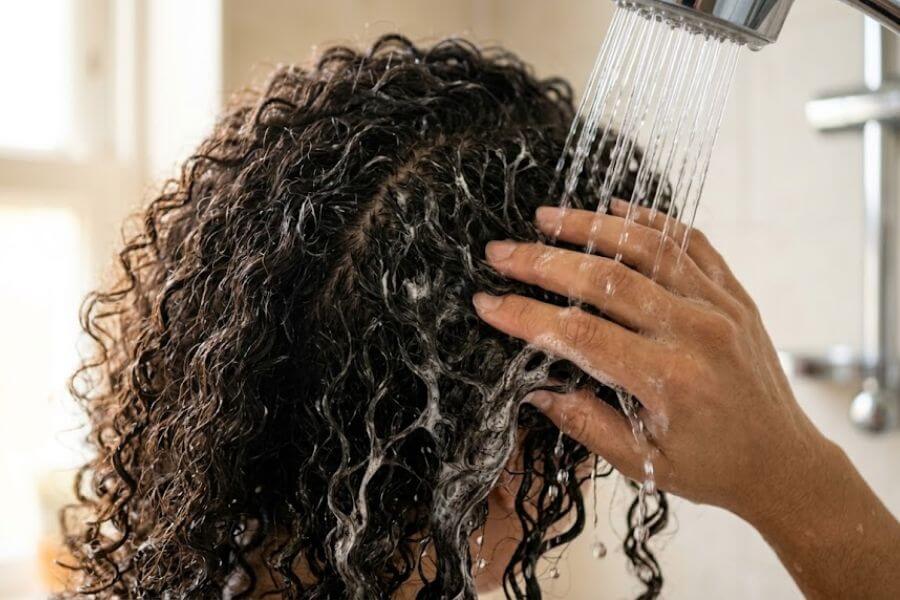
Pour a quarter-sized amount of clarifying shampoo into your palms and add a few drops of water to create a lather in your hands first. Apply the soap directly to your scalp. Do not pile your hair on top of your head or rub the ends together like you are scrubbing a stained shirt. Keep the friction at the root level.
Massage with Your Fingertips
Use the soft pads of your fingertips to massage your scalp using circular motions. Move from the front hairline down to the nape of your neck. Avoid using your fingernails, as strong scratching can create tiny cuts on your sensitive scalp, leading to irritation and burning from the strong shampoo.
The Gentle Glide Rinse
When you rinse, let the water carry the soap suds down the length of your hair strands. This secondary contact is more than enough to clean the middle and ends of your hair without drying them out. Ensure the water runs completely clear before moving to the next step.
The Golden Rule of Post-Clarify Moisture Restoration
The moment you rinse a clarifying shampoo out of your hair, your strands are completely bare and vulnerable. The protective shield is gone. If you step out of the shower right now, your hair will dry into a frizzy, tangled mess.
You must immediately seal the hair and replace the lost moisture. This is where a high-quality deep conditioner or hair mask becomes non-negotiable. Normal conditioners only coat the surface, but right now, your hair cuticles are open and clean, making it the absolute best time for a deep-penetrating mask.
Apply a generous amount of deep conditioner from the mid-lengths down to your ends. Use a wide-tooth comb to spread it evenly and remove tangles safely. Leave the treatment on your hair for fifteen to twenty minutes. To make it work even better, pop on a plastic shower cap. The heat from your head gets trapped inside, helping the rich moisture sink deep into the core of each strand.
Natural and DIY Clarifying Alternatives
If you prefer to avoid commercial shampoos or want to use items from your kitchen pantry, you can create excellent clarifying treatments at home. These natural options are highly effective when mixed correctly.
The Apple Cider Vinegar Rinse
Apple cider vinegar is acidic, which matches the natural pH of your scalp. It breaks down mild product buildup, smooths down the hair cuticle, and adds an incredible natural shine to your strands.
- The Recipe: Mix two tablespoons of raw apple cider vinegar with one cup of warm water.
- The Application: After your regular shampoo, pour the mixture over your hair and massage your scalp. Let it sit for three minutes, then rinse thoroughly with cool water.
The Baking Soda Paste
Baking soda is alkaline and acts as a tiny scrub to break up heavy grease and styling pastes. Because it is strong, use this option with caution.
- The Recipe: Mix one tablespoon of baking soda with two tablespoons of your regular gentle shampoo to form a smooth paste.
- The Application: Massage the paste gently into your oily roots, avoiding the dry ends entirely. Rinse out completely with plenty of water.
The Lemon Juice Shine Treatment
Lemon juice contains natural citric acid that cuts through hard water minerals and resets dull, lifeless strands.
- The Recipe: Mix the juice of one fresh lemon with two cups of warm water.
- The Application: Pour the liquid over your clean scalp, leave it on for two minutes, and rinse. Always follow with a heavy conditioner, as lemon juice can be drying if left on too long.
Common Mistakes That Destabilize Your Hair Health
Even with the best intentions, it is easy to make simple mistakes that ruin your hard work and leave your hair looking worse than before. Watch out for these common blunders.
Using a clarifying shampoo every single time you wash your hair is the fastest route to damage. These products are specialty treatments, not daily drivers. Treat them like a deep face mask, not your everyday face wash.
Another massive mistake is skipping the root focus. If you apply the clarifying shampoo directly onto your dry ends, you are attacking the oldest, most fragile part of your hair. The ends rarely get product buildup; they just get dry. Keep the soap at the top where the oil glands live.
Rinsing with boiling hot water is also highly destructive. Hot water strips away the remaining natural moisture and scalds your scalp. Always stick to warm water for washing and cool water for your final rinse to lock the hair cuticles flat.
DIY Methods Comparison
| DIY Ingredient | Primary Target | Strength Level | Best Hair Companion |
| Apple Cider Vinegar | Product film and dullness | Gentle | Curly and color-treated strands |
| Baking Soda | Heavy oils and waxes | Strong | Thick and extremely oily hair |
| Lemon Juice | Hard water minerals | Medium | Straight and fine hair textures |
Protecting Your Hair Between Clarifying Sessions
To avoid needing heavy clarifying treatments too often, you can make smart changes to your daily styling habits. Preventing buildup is always better than trying to scrub it away later.
Switch out your heavy, petroleum-based styling products for water-soluble alternatives. Water-soluble creams dissolve easily with plain water, meaning your regular shampoo can remove them without any extra help.
Consider installing a filtering shower head in your bathroom. These affordable attachments catch hard water minerals, chlorine, and heavy metals before they ever reach your head. This keeps your hair feeling soft and clean for much longer periods.
Finally, embrace the power of protective styling or lighter product application. Instead of slathering gels from roots to ends, use a tiny amount only where you need control. Your hair will stay cleaner, lighter, and healthier overall.
Frequently Asked Questions
Can I use a clarifying shampoo if I have dyed or color-treated hair?
Yes, you can use a clarifying shampoo on color-treated hair, but you must be incredibly careful. Because these formulas clean deeply, they can pull the artificial color molecules right out of your strands, causing your expensive dye job to fade quickly. If you have dyed hair, look specifically for bottles labeled as color-safe clarifying shampoos. Limit your deep cleaning to once a month, and try to wait at least two weeks after your fresh color appointment before doing a clarifying wash.
Will clarifying my hair help eliminate dandruff permanently?
Clarifying can help reduce the appearance of flakes caused by product buildup and oily buildup, but it is not a cure for medical dandruff. True dandruff is often caused by an overgrowth of a natural fungus on the scalp or other medical skin conditions. While a clarifying shampoo clears away the crust and temporary flakes, it does not treat the root fungal issue. If you have chronic dandruff, you need a targeted medicated shampoo containing zinc pyrithione or salicylic acid rather than a standard clarifying product.
Is it safe to use a clarifying shampoo on a young child or teenager?
Children rarely need clarifying shampoos because they do not typically use heavy adult styling creams, gels, silicones, or hairsprays. Their scalps also produce far less natural oil than an adult scalp. If a child swims frequently in a chlorinated pool or plays in heavy mud, you can use a very gentle, kid-safe clarifying or swim shampoo to remove the chlorine or dirt. For teenagers who are just starting to use styling products, a mild clarifying shampoo once a month is perfectly safe and useful.
Can I use dish soap or baking soda if I do not own a clarifying shampoo?
You should completely avoid using liquid dish soap on your hair. Dish soap is formulated to strip heavy grease off metal pans and ceramic plates; it is far too harsh for human skin and hair strands. It will completely destroy your moisture barrier and leave your hair feeling like matted straw. Baking soda is a usable DIY alternative when mixed correctly with a regular shampoo, but it should only be used rarely since its high pH can stress your hair cuticles if overused.
Should I apply my regular conditioner after using a clarifying shampoo?
A regular conditioner is not strong enough to fix your hair after a deep clarifying session. Regular conditioners only coat the surface of your hair to help with detangling. Because clarifying leaves your hair completely bare and open, you should always upgrade to a deep conditioning mask or an intense repair treatment. These formulas have smaller molecules that can jump inside the open hair shaft to rebuild strength and lock in lasting moisture from the inside out.