Key Takeaways
- Sun and Heat Protection: High heat styling tools and UV rays strip away moisture, damage the protein structure of your hair, and fade your color.
- Keep It Safe: Always apply a leave-in guard before styling or walking outside to create a shield over your strands.
- The Lower The Better: Keep your styling tools on lower settings and limit your time under direct sunlight by wearing a hat.
- Moisture Is Essential: Use deep conditioning masks and natural oils weekly to rebuild the hydration that hot tools and the sun take away.
The Invisible Threat To Your Strands
We often spend a lot of time thinking about skin care. We buy lotions, creams, and sunscreens to protect our face and body from the hot sun. Yet we frequently forget that our hair goes through the exact same environment every single day. Your hair faces two major bullies on a regular basis. The first bully is the high heat from your favorite styling tools, like flat irons, curling wands, and blow dryers. The second bully is the sun itself, which shoots down powerful ultraviolet rays. These rays are commonly known as UV rays. Both of these forces can turn your soft, shiny hair into a dry, brittle mess that breaks when you touch it.
When you apply intense warmth to your hair or sit out in the sun for hours, you are changing the actual structure of each strand. Your hair is made of a tough protein called keratin. This protein is held together by tiny bonds. High heat and UV rays break these bonds down. Once those bonds are damaged, your hair loses its natural bounce, its shine, and its strength. It starts to look dull, feels rough like straw, and develops split ends that travel up the hair shaft.
Thankfully, you do not have to give up your styling tools or stay indoors forever to keep your hair healthy. You just need to learn how to defend your hair from these everyday threats. By building a simple defense routine, you can enjoy beautifully styled hair and sunny outdoor adventures without sacrificing the health of your strands. Let us look at how heat and the sun actually affect your hair and what you can do to stop the damage before it even starts.
Understanding Heat Damage
To fight back against heat damage, you need to know exactly what happens when your hot tools touch your hair. Every single strand of hair on your head has an outer layer made of tiny, overlapping scales. This outer layer is called the cuticle. Think of the cuticle like the shingles on the roof of a house. Its main job is to protect the soft inner core of the hair and lock in moisture.
When you use a flat iron or a curling wand that is turned up too high, you are essentially boiling the moisture inside your hair. The water trapped in the inner core turns into steam instantly. This steam pushes hard against the outer cuticle layer to escape. This process can cause the cuticle to crack, lift, or even burst completely. Once the cuticle is lifted and broken, the moisture leaks out easily, leaving your hair incredibly dry.
The Role Of Keratin Proteins
As mentioned, your hair is mostly made of keratin protein. This protein gives your hair its strength, shape, and flexibility. When you apply temperatures above three hundred degrees to your hair, that protein begins to change its shape permanently. The heat melts the natural proteins, making them lose their elasticity.
Elasticity is what allows your hair to stretch and snap back into place without breaking. When you lose that elasticity, your hair becomes stiff and fragile. This is why you might notice that your hair no longer holds a natural curl or looks completely lifeless after months of heavy tool usage.
Signs Your Hair Is Burning
It is not always easy to tell when your hair is reaching its breaking point until the damage is already done. However, your strands will give you warning signs that you need to watch for closely.
- A Strange Smell: If you smell something sweet or smoky while straightening your hair, your strands are literally scorching.
- Rough Texture: Run your fingers from your roots down to your ends. If the tips feel dry, crunchy, or rough compared to the top, heat is taking a toll.
- Instant Frizz: When you step out into humid air and your hair instantly puffs up, it means your cuticle is open and searching for moisture from the air.
- Altered Curl Pattern: If you have naturally wavy or curly hair and notice that certain sections are now straight or limp, the protein structure has been warped by heat.
The Power Of Ultraviolet Rays
While hot styling tools do immediate damage in your bathroom, the sun works more slowly but just as dangerously outside. The sun releases UV rays that impact your hair in a different way than a flat iron does. Think of UV rays like a silent bleaching agent that slowly eats away at the health of your hair whenever you are outdoors.
When UV rays hit your bare hair, they create highly reactive particles called free radicals. These particles act like tiny wrecking balls, attacking the protein bonds and stripping away the natural lipids that keep your hair shiny. Lipids are natural oils that coat your hair to keep it smooth and waterproof. Without these lipids, your hair cannot hold onto moisture, leading to severe dehydration.
How The Sun Fades Your Color
If you dye your hair or have natural highlights, you might notice that spending a week at the beach completely changes your hair color. This is because UV rays break down the pigment particles inside your hair. Pigment is what gives your hair its color, whether it comes from a box or from your genes.
The sun oxidizes these color pigments, which means it chemically alters them. This process causes dark hair to turn a brassy orange or copper color. It makes blonde hair look bleached out, dry, and yellow. Even worse, as the sun destroys the pigment, it creates tiny holes in the hair shaft, making the strand weaker overall.
Sun Damage Vs Heat Damage
It helps to look at how these two forces differ so you can protect against both effectively. While they both cause dryness and breakage, they attack your hair through different paths.
| Type Of Threat | Source Of Threat | Main Area of Damage | Speed of Damage |
| Heat Damage | Styling tools like irons and dryers | Internal moisture and cuticle structure | Very fast and immediate |
| UV Exposure | Natural sunlight and outdoor rays | Surface lipids and color pigments | Slow and gradual over time |
Building Your Daily Defense Shield
Protecting your hair does not require a ton of complicated steps. It simply requires consistency and the right habits before you expose your hair to any danger. The absolute most important product you can add to your routine is a quality heat protectant spray or cream.
Think of a heat protectant like a fireproof jacket for your hair. These products contain ingredients like silicones or specialized plant polymers that coat the outside of the hair strand. When you apply heat, the product absorbs the brunt of the warmth, slowing down the transfer of heat to the inner core of your hair. This gives the heat a chance to style your hair without reaching temperatures that melt the keratin protein.
How To Apply Protection Uniformly
Many people own a heat protectant but still get damage because they do not apply it correctly. They usually spray it three or four times on the top layer of their hair and call it a day. This leaves the middle and bottom layers completely defenseless.
To get true protection, you need to divide your hair into sections. Spray each section from the mid-lengths down to the very tips. Use a wide-tooth comb to brush the product through your hair. This ensures that every single strand is coated in a thin protective layer before any hot tool comes into contact with it.
Choosing Spray Or Cream
Depending on your hair type, you might prefer one type of protectant over another. Both work well, but they suit different textures better.
- Lightweight Sprays: These are best for fine, thin, or straight hair. They provide excellent coverage without weighing down your strands or making your hair look greasy.
- Rich Creams and Serums: These are ideal for thick, coarse, curly, or naturally dry hair. They offer intense moisture while forming a heavy barrier against high heat.
Smart Styling Habits For Healthy Hair
You do not need to throw away your blow dryer or flat iron to save your hair. Instead, you need to change how you use them. The biggest mistake people make is turning their tools up to the highest possible temperature setting because they think it will make the styling process faster.
Most styling tools can heat up to four hundred and fifty degrees. This temperature is high enough to melt certain metals and is far too high for human hair. Unless you have incredibly thick, coarse, or chemically untreated hair, you should never let your tools go above three hundred and fifty degrees. For fine or thin hair, you should keep the temperature between two hundred and fifty and three hundred degrees.
Lowering The Temperature Settings
Take a look at your styling tools today. If they only have an on and off switch without a temperature screen, they are likely heating up to a standard high temperature that is dangerous for daily use. Try upgrading to tools that let you select the exact degree of warmth.
| Hair Texture | Recommended Styling Temperature | Risk of High Heat Damage |
| Fine or Thin | 250 to 300 degrees | Very high, burns easily |
| Medium or Normal | 300 to 350 degrees | Moderate, needs care |
| Thick or Coarse | 350 to 380 degrees | Lower, but still vulnerable |
The Air-Drying Routine
One of the easiest ways to cut down on heat damage is to let your hair dry naturally whenever you can. Air-drying gives your hair a break from the constant blasting of hot air. If you need to style your hair for a special event, try letting it air-dry eighty percent of the way first.
Once your hair is mostly dry, you can use your blow dryer on a cool or warm setting to finish the look and add shape. This simple change reduces the amount of time your hair spends under direct heat by more than half, which saves your cuticles from unnecessary stress.
Proper Blow-Drying Form
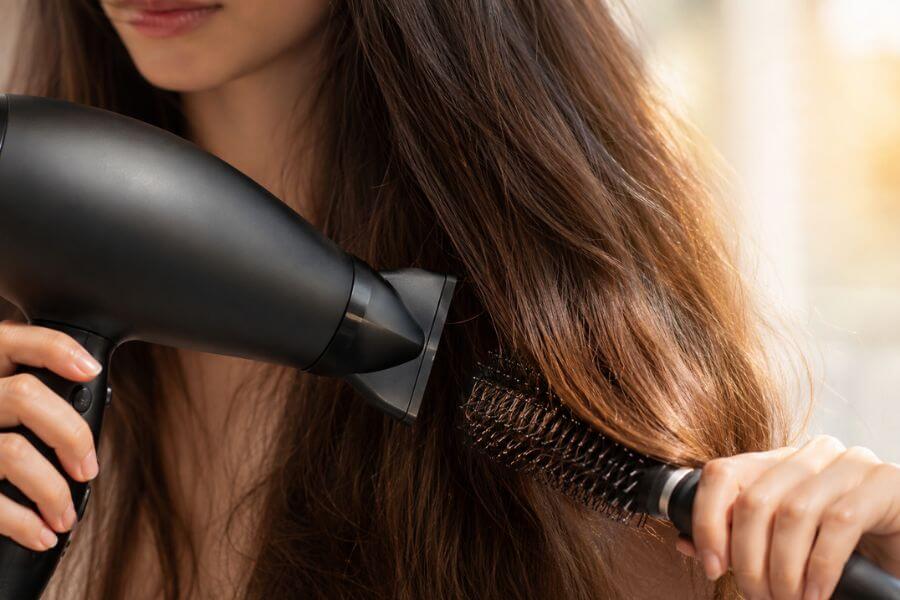
When you do use a blow dryer, your technique matters immensely. Never press the nozzle of the dryer directly against your hair or your brush. This concentrates the heat into one tiny spot and can burn through your hair instantly.
Instead, keep the dryer at least six inches away from your head. Always point the nozzle downward, from your roots toward your ends. This helps smooth down the cuticle scales, creating a shinier finish and reducing frizz naturally.
Shielding Your Hair From The Sun
When you prepare for a day outside, applying hair sunscreen should become just as automatic as applying face sunscreen. Yes, sunscreens made specifically for your hair actually exist. These products usually come in light mists or leave-in oils that contain UV filters to block both UVA and UVB rays from damaging your strands.
If you do not have a specific hair sunscreen, you can make your own simple shield. Mix a dime-sized amount of your regular body sunscreen with water in a small spray bottle. Lightly mist it over your hair before stepping out into the sun. It creates a lightweight shield that blocks out those damaging rays without leaving a sticky film.
The Ultimate Sun Protection Accessory
Nothing beats a physical barrier when it comes to stopping UV rays. Wearing a hat is the absolute best way to protect your hair, your scalp, and your face all at the same time.
Look for hats with a tight weave, like canvas or dark cotton, rather than loose straw hats that let sunlight peek through the holes. A wide-brimmed hat is especially wonderful because it covers the full length of your hair down to your shoulders. If you love baseball caps, tuck your ponytail underneath the back so the ends are not left hanging out in the direct sunlight.
Choosing Your Outdoor Headwear
Different hats offer different levels of safety for your hair. It helps to choose the right option for your outdoor activities.
- Wide-Brimmed Sun Hats: Excellent for long days at the beach or pool. They block the sun from all angles and keep your neck cool.
- Baseball Caps: Great for sports or hiking, but they leave the lengths of your hair exposed. Remember to braid your hair or tuck it in.
- Satin-Lined Bucket Hats: The top choice for preventing friction. The satin lining keeps your hair smooth while the outer fabric blocks the hot sun rays.
Deep Hydration And Repair Rituals
Since heat and the sun are constantly robbing your hair of its natural moisture, you must actively put that moisture back in. A standard conditioner that you wash out after thirty seconds is not enough to repair the deep damage caused by a flat iron or a long day outside. You need to introduce deep conditioning masks into your weekly routine.
Look for deep conditioners that contain moisturizing ingredients like shea butter, argan oil, glycerin, and avocado oil. These ingredients are rich in fatty acids that can penetrate deep into the hair shaft to restore lost hydration. Apply your mask once a week after shampooing, leave it on for fifteen to twenty minutes, and then rinse it out with cool water.
The Power of Plant Oils
Natural oils are incredible for sealing the cuticle and locking in moisture. They act like a waterproof topcoat that keeps your hair from drying out throughout the day.
- Argan Oil: Known as liquid gold, this light oil absorbs quickly into the hair without leaving it greasy. It is packed with vitamin E, which fights off sun damage.
- Coconut Oil: This oil can actually sink inside the hair shaft to stop protein loss. It is perfect as a pre-wash treatment before you jump into the shower.
- Jojoba Oil: This oil matches the natural sebum produced by your scalp almost perfectly. It balances out dry ends beautifully without weighing fine hair down.
The Cool Water Rinse Trick
When you wash your hair, avoid using burning hot water. Hot water opens up the hair cuticle, allowing your expensive treatments and natural moisture to escape down the drain. It can also dry out your scalp, leading to itchiness and flaking.
Instead, wash your hair with lukewarm water to cleanse it comfortably. When it comes time to rinse out your conditioner, turn the handle down to a cool setting. The cold temperature snaps the cuticle shut instantly, locking in the moisturizing ingredients from your products and leaving your hair incredibly shiny.
Swimming Safely In Chlorine And Saltwater
Summer days often involve jumping into a swimming pool or splashing around in the ocean waves. While this is incredibly fun, both chlorine and saltwater can devastate hair that is already fighting off heat and sun damage. Chlorine is a harsh chemical used to keep pools clean, but it acts like a magnet for the natural oils in your hair, stripping them away instantly. Saltwater, on the other hand, is highly osmotic, meaning it draws water right out of your hair strands, leaving them parched and tangled.
When you combine pool chemicals or ocean salt with the blazing hot sun, you create a recipe for extreme hair breakage. The salt or chlorine dries on your hair under the sun, magnifying the UV rays like a magnifying glass on a leaf. This speeds up the breakdown of your hair proteins and can leave your ends splitting before you even leave the water.
The Pre-Soak Secret Method
Fortunately, there is an incredibly simple trick to prevent your hair from drinking in pool chemicals or ocean salt. Before you step into the water, head over to the outdoor shower or a sink and soak your hair completely with clean tap water.
Your hair acts just like a kitchen sponge. If a sponge is completely dry, it will suck up any liquid it touches immediately. But if the sponge is already saturated with clean water, it cannot hold any more liquid. By soaking your hair with clean water first, you prevent the chlorinated or salty water from seeping into your strands.
The Layer Of Protection
To make this trick even more powerful, apply a generous amount of leave-in conditioner or a natural oil to your wet hair before swimming. This creates a slippery barrier that keeps the pool chemicals from touching your hair cuticles directly. Once you finish swimming, rinse your hair with fresh water immediately to remove any surface residue before it has a chance to dry under the hot sun.
Choosing The Right Tools And Products
Not all hair styling tools are created equal. If you are using an old flat iron with chipped metal plates, you are causing massive mechanical damage along with severe heat damage. Metal plates often heat up unevenly, creating hot spots that can scorch your hair in one second while barely styling the rest.
When shopping for tools, look for those made with ceramic or tourmaline plates. Ceramic distributes heat perfectly evenly across the entire surface, so you do not have to swipe over the same section of hair multiple times. Tourmaline plates release negative ions, which help close the hair cuticle down while you style, trapping moisture inside and creating a sleek finish.
Reading Product Labels Wisely
When building your defense routine, you need to become an expert at checking the ingredient lists on the back of your hair bottles. Avoid products that contain high amounts of drying alcohols, often listed as isopropyl alcohol or alcohol denat. These alcohols dry out your hair instantly to make the product dry faster on your skin, but they leave your strands highly vulnerable to heat damage.
Instead, look for ingredients that offer natural hydration and structure. Look for hydrolyzed proteins, which are tiny protein pieces that can patch up the holes in a damaged hair cuticle. Look for natural humectants like aloe vera and honey, which pull moisture out of the air and hold it close to your hair shaft throughout the day.
Hair Tool Materials Compared
Investing in the right material for your styling irons can completely transform the health of your hair over time.
| Plate Material | How It Works | Best Hair Type For This Material |
| Pure Ceramic | Provides gentle, even heat that warms hair from the inside out | Fine, thin, or damaged hair textures |
| Tourmaline | Crushed gemstone that creates ions to seal down hair moisture | Frizzy, wavy, or rebellious hair |
| Titanium | Heats up incredibly fast and holds very high temperatures | Coarse, very thick, or unmanageable hair |
Nighttime Hair Care For Recovery
Your protection routine should not stop when the sun goes down. In fact, nighttime is the perfect opportunity for your hair to recover from the stress of daily heat styling and daytime UV exposure. While you sleep, your body goes into a natural state of rest and repair, and your hair can benefit from this time immensely if you set it up for success.
The first major change you should make is swapping out your standard cotton pillowcase for a satin or silk pillowcase. Cotton is a highly absorbent fabric with rough fibers. As you toss and turn during the night, cotton rubs against your hair cuticles, causing friction that lifts the scales and creates tangles. Cotton also sucks the natural oils and leave-in products right out of your hair, leaving it dry by morning. Satin and silk allow your hair to slide smoothly across the surface without any friction or moisture loss.
Protective Nighttime Hairstyles
Never go to bed with your hair down if it is prone to tangling or already damaged by heat. Instead, gather your hair into a loose, high bun at the top of your head, often called a pineapple. Use a soft silk scrunchie instead of a tight elastic band, which can snap your fragile strands.
Alternatively, you can weave your hair into a loose three-strand braid. This keeps your hair neatly contained and prevents it from rubbing against your sheets. As a bonus, when you wake up and undo the braid, you will have gorgeous, natural waves without having to touch a single hot styling tool in the morning.
Overnight Moisture Treatments
If your ends are feeling especially crunchy from a weekend spent in the sun, use the nighttime hours to apply an overnight serum or oil treatment. Warm a few drops of argan or jojoba oil in your palms and smooth it exclusively onto the bottom three inches of your hair before bed. This gives the oil eight solid hours to sink deep into the parched strands, leaving them soft, pliable, and fully restored when you wake up.
Frequently Asked Questions
Can I use a flat iron on wet hair if I apply a heat protectant spray first?
No, you should never use a flat iron or a curling wand on wet or damp hair under any circumstances. When your hair is wet, its internal structure is highly vulnerable and full of water. Pressing an iron that is hundreds of degrees hot against wet strands causes that water to boil instantly, turning into trapped steam that explodes through your hair cuticle. This creates permanent blisters along your hair shaft that cannot be repaired. Always make sure your hair is one hundred percent dry before letting a hot iron touch it.
How often should I use a deep conditioning mask to fix heat damage?
If your hair is currently experiencing severe dryness or breakage from styling tools, you should use a deep conditioning mask once every week. Leaving it on for fifteen to twenty minutes allows the moisture to penetrate beneath the surface. However, avoid using a heavy mask every single day, as this can cause a condition called hygral fatigue. This happens when your hair becomes waterlogged and loses its structure, making it feel mushy and weak. Balance is key to keeping your strands strong.
Does natural uncolored hair still get damaged by the sun?
Yes, natural hair that has never been dyed or chemically treated is still highly vulnerable to sun damage. While dark natural hair has more melanin pigment to help block out some of the UV rays, the sun will still break down the outer lipid layer and melt the internal proteins over time. Light natural hair, like natural blonde or red hair, has even less built-in protection and can experience severe dryness, fading, and brittleness very quickly if left uncovered in the bright sun.
Can heat damage cause my hair to stop growing from the roots?
Heat damage from styling tools does not directly stop your hair from growing out of your scalp, because your roots are alive under your skin where the hot tools cannot reach. However, heat damage causes severe breakage at the ends of your hair. If your ends are constantly breaking off at the same speed that your roots are growing, it will look like your hair is stuck at the exact same length forever. To see actual length growth, you must protect your ends from burning and breaking.
How do I know if my heat protectant product is actually working?
A good heat protectant should leave your hair feeling soft, smooth, and easy to comb through after you finish styling. If your hair feels stiff, sticky, or smells like it is burning while you style it, your current product is not doing its job or you did not apply enough of it. Another simple test is to apply the product to the back of your hand and blow-dry it on high for a few seconds. If your skin feels uncomfortably hot, the product is not forming a strong enough shield.