Key Takeaways
- The Internal Mirror: Your skin is a direct reflection of what happens inside your digestive system. When your gut flora is out of balance, it sends warning signals directly to your face and body.
- The Three Skin Signals: Acne, eczema, and rosacea are not just random surface flaws. They are dynamic inflammatory responses triggered by a leaky gut barrier, an overactive immune system, or chronic internal stress.
- Simple Daily Actions: Healing your skin starts from the inside out. You can calm irritation by choosing whole foods, drinking plenty of water, managing daily stress, and feeding your good microbes with prebiotic fibers.
Understanding Your Second Brain and Your Skin
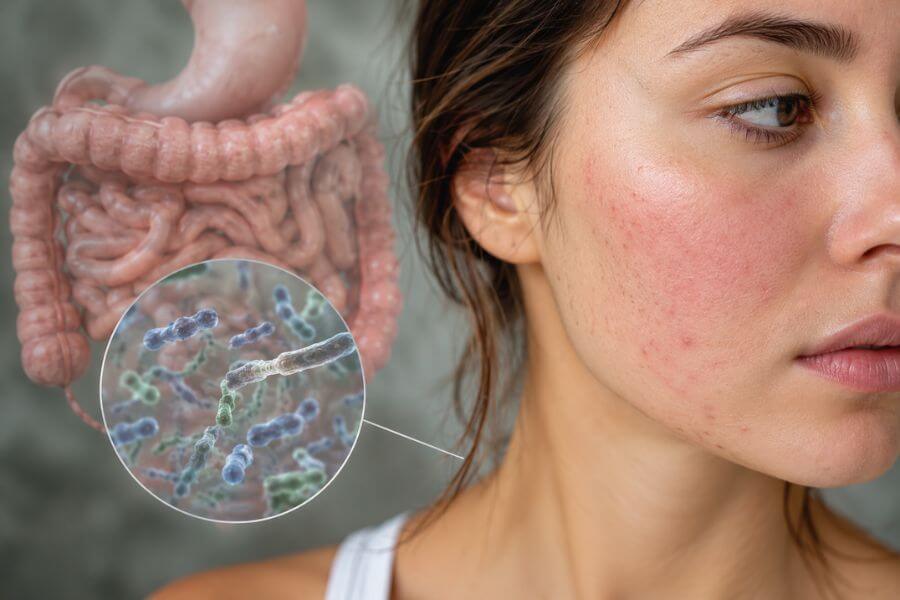
Have you ever wondered why your skin breaks out or turns bright red right before a big presentation or after a weekend of eating heavy fast food? It feels like your skin has a mind of its own, but it is actually taking direct orders from a deeper place. Your body contains a complex communication highway that links your digestive system directly to your skin cells. Scientists call this the gut-skin axis. It is a busy, two-way street where billions of tiny living organisms inside your stomach and intestines chat with your skin every single second.
When your digestive tract is happy, calm, and full of helpful microbes, your skin usually looks bright, clear, and smooth. But when your inner ecosystem becomes chaotic or unbalanced, your skin is often the very first place to sound the alarm. This inner connection is changing the way we look at common skin conditions like stubborn breakouts, dry itchy patches, and sudden redness. Instead of just slathering heavy creams on your face, the real secret to glowing skin lies deep within your belly.
Meet Your Inner Microbe Team
To truly understand how this system works, you have to look closely at the massive community of microscopic life forms living inside you. This community is called your gut microbiome. It is made up of trillions of tiny bacteria, fungi, and viruses that call your digestive tract home. Do not let the word bacteria scare you. Most of these tiny creatures are your ultimate health allies, working around the clock to keep you feeling great.
The Good Guys and Their Superpowers
The helpful bacteria in your digestive system act like a highly trained security team. They break down the food you eat so your body can absorb vital nutrients, they manufacture essential vitamins, and they train your immune system to tell the difference between friendly visitors and harmful invaders. These good microbes also produce special compounds called short-chain fatty acids. Think of these compounds as fuel that strengthens the walls of your intestines, keeping the barrier tight and secure so no bad particles escape into your bloodstream.
What Happens When Things Go Wrong
Sometimes, this inner ecosystem loses its balance. This state of imbalance happens when the helpful bacteria decrease and the harmful, inflammatory microbes start to multiply. Doctors call this state dysbiosis. When bad microbes take over, they create a lot of internal noise and chaos. They can irritate the lining of your digestive system, slow down your digestion, and release waste products that trigger your body’s defense systems. When your body stays on high alert, it causes inflammation, which travels through your blood and eventually shows up on your forehead, cheeks, and arms.
How Your Digestive Wall Connects to Your Face
Imagine the lining of your digestive tract as a super-fine mesh screen or a high-tech filter. Its job is to let good things like vitamins, minerals, and water pass through into your body while keeping bad things like undigested food chunks, toxins, and harmful bugs locked away safely inside the tube to be flushed out later.
The Problem of a Leaky Filter
When you experience chronic stress, eat too much processed sugar, or lack sleep, that beautiful mesh screen starts to get worn down. Small gaps open up between the cells of your digestive wall. This condition is often described as a leaky gut. When these gaps form, tiny particles that should stay inside your digestive system slip through the cracks and enter your bloodstream.
The Immune System Fire Alarm
Your blood is monitored by your immune system, which acts like a protective army. When your immune army spots these escaped food particles and toxins floating where they do not belong, it freaks out. It assumes your body is under attack and sounds a massive fire alarm. The army releases inflammatory chemicals called cytokines to fight off the perceived threat. These chemicals travel everywhere through your circulatory system, and when they land in your skin, they create a chaotic scene. They make your skin sensitive, speed up oil production, and cause the painful irritation we see as chronic skin issues.
Deep Dive into Acne and the Inner Balance
Acne is one of the most common skin issues in the world, affecting millions of teenagers and adults. While most people blame dirty pores or greasy skin products, breakouts are heavily driven by what is going on beneath the surface of your stomach.
The Oil and Sticky Cell Connection
To get a pimple, you need three main ingredients: too much skin oil, sticky dead skin cells that plug up your pores, and a specific type of bacteria that loves to live in that trapped oil. Your gut microbiome plays a major role in regulating how much oil your skin makes. When your inner ecosystem is out of whack, it changes how your body handles insulin, a hormone that regulates blood sugar. High insulin levels tell your skin’s oil glands to go into overdrive, turning your face into a breeding ground for breakouts.
Turning Down the Volume on Breakouts
When you feed your inner good bacteria with wholesome foods, they help steady your blood sugar and keep your hormones in a peaceful state. This means your oil glands stay calm, producing just enough moisture to protect your skin without drowning your pores. A balanced digestive system also reduces overall inflammation, which means that even if a pore does get plugged, it is much less likely to turn into a giant, painful, red bump.
| Food Choice | Effect on Gut Microbiome | Result on Your Skin |
| Sugary Sodas and Candy | Feeds harmful bacteria and yeasts | Increases skin oil and causes red breakouts |
| Plain Yogurt and Berries | Boosts friendly bacteria teams | Calms inflammation and keeps pores clear |
| Whole Wheat Bread and Beans | Strengthens the digestive wall | Lowers skin sensitivity and reduces bumps |
Understanding Eczema and the Sensitive Barrier
Eczema shows up as dry, red, incredibly itchy patches of skin that can make you feel miserable. People with eczema often have a weak outer skin barrier, meaning their skin loses moisture too fast and lets outside irritants in too easily. Interestingly, this weak outer barrier almost always mirrors a weak inner barrier.
The Overreactive Security Team
Your immune system learns how to behave based on the signals it gets from your digestive tract. If your inner microbes are diverse and peaceful, your immune cells stay relaxed. But if your digestive system is filled with bad bacteria and leaky gaps, your immune system becomes hyper-sensitive and anxious. It starts overreacting to ordinary things like dust, pollen, or certain fabrics. When your immune system overreacts, it sends a wave of intense inflammation straight to your skin, breaking down your skin’s natural moisture barrier from the inside and leaving it dry, cracked, and intensely itchy.
Hydrating Your Skin from the Inside Out
By focusing on your digestive health, you can actually help rebuild your skin’s protective shield. Good bacteria produce nutrients that help your body create ceramides, which are natural fats that lock moisture into your skin cells. When your inner wall heals, the constant fire alarm stops ringing. Your immune system calms down, which gives your dry, angry skin patches a chance to heal, retain water, and become smooth and resilient once again.
Unpacking Rosacea and the Redness Highway
Rosacea is a condition that causes sudden flushing, persistent redness, and visible blood vessels, mostly across your nose and cheeks. It can also cause small, red bumps that look a bit like acne but feel very different. Rosacea is deeply tied to your body’s nervous system and blood vessels, both of which are controlled by your digestive health.
The Temperature and Blood Vessel Trick
Have you ever noticed that hot drinks, spicy food, or warm weather can make rosacea flare up instantly? That happens because people with rosacea have highly sensitive blood vessels that dilate, or open wide, very easily. Your gut microbiome releases specific chemical messengers that tell your blood vessels when to expand and when to contract. When your inner ecosystem is inflamed, it sends faulty signals that cause the blood vessels in your face to stay wide open, trapping warm blood near the surface and causing that permanent flushed look.
The Overgrowth Factor in Your Stomach
There is also a very specific digestive issue called Small Intestinal Bacterial Overgrowth, or SIBO for short. This happens when bacteria that normally belong in your large intestine sneak into your small intestine and multiply where they should not be. Studies show that a remarkably high number of people with rosacea also have this specific bacterial mix-up. When doctors help people clear up this internal overgrowth, their facial redness and swelling often disappear dramatically.
Daily Habits That Harm Your Inner Ecosystem
It is easy to accidentally upset your inner microbe team because our modern world is full of things that disrupt them. Knowing what bothers your inner helpers is the first step to making better choices for your skin.
The Sweet and Processed Food Trap
The friendly bacteria in your body thrive on natural, earth-grown foods that contain lots of fiber. On the flip side, harmful bacteria and yeasts absolutely love processed sugar, white flour, and artificial additives. When you eat a diet full of packaged snacks, fast food, and sweet treats, you are essentially starving your skin’s best friends and feeding the bad guys. This causes the bad microbes to multiply rapidly, leading to a leaky gut and a sudden wave of skin irritation.
The Invisible Toll of Stress and Poor Sleep
Your brain and your digestive tract talk to each other constantly through a massive nerve pathway. When you feel stressed out, anxious, or don’t get enough sleep, your brain sends distress signals down to your stomach. This stress physics actually slows down your digestion, reduces blood flow to your stomach cells, and alters the balance of your microbes within hours. Stress also makes your digestive wall more porous, letting those pesky toxins slip into your blood and trigger skin flare-ups.
Smart Strategies to Heal Your Skin from Within
The great news is that your digestive system is incredibly resilient. You can start turning things around today by adopting simple, loving habits that nourish your inner body and bring peace back to your skin.
Loading Up on Colorful Fiber
Fiber is the ultimate superfood for your good bacteria. When you eat fiber-rich foods, your microbes ferment them into those magical short-chain fatty acids that heal your digestive lining and cool down skin inflammation. Try to include a wide variety of colorful plants in your meals every single day. Think of apples, bananas, oats, broccoli, sweet potatoes, and lentils. Each different color provides different nutrients that feed different teams of helpful bacteria, making your inner ecosystem rich and diverse.
Embracing Living Foods
Another fantastic way to support your inner team is to consume foods that already contain live, friendly microbes. These are known as fermented foods. When you eat them, you are sending a fresh wave of helpful reinforcements down into your digestive tract. Excellent options include plain traditional yogurt, kefir, sauerkraut, and traditional pickles. Just make sure to choose versions that do not have added sugars, as excess sugar will cancel out the benefits.
Prioritizing Rest and Water
Never underestimate the power of a good night of sleep and a tall glass of clean water. Sleeping seven to nine hours gives your body time to repair both your digestive lining and your skin cells. Water acts like a natural flushing system, helping your kidneys and liver clear out toxins so they do not have to escape through your skin pores. It also keeps your digestion moving smoothly, ensuring that waste is removed from your body before it can cause internal irritation.
Comparing How Your Skin Responds to Inner Balance
To help you see the big picture, it helps to look at how different skin conditions react to both an unhappy digestive system and a thriving, healthy one.
Skin Conditions and Their Inner Triggers
- Acne Breakouts
- When Gut is Unbalanced: High insulin levels trigger massive oil production, sticky skin cells plug pores, and bad bacteria cause angry red pimples.
- When Gut is Healthy: Balanced hormones keep oil production light and clean, cells shed normally, and pores stay clear and calm.
- Eczema Patches
- When Gut is Unbalanced: An anxious immune system overreacts to everything, breaking down the skin’s outer layer and causing dry, itchy spots.
- When Gut is Healthy: A relaxed immune system allows the skin to build protective ceramides, trapping moisture and keeping patches smooth.
- Rosacea Flushing
- When Gut is Unbalanced: Bacterial overgrowth and internal toxins cause facial blood vessels to stay wide open, creating a hot, red, flushed face.
- When Gut is Healthy: Clear digestive pathways send peaceful signals to blood vessels, reducing redness and keeping facial temperature cool.
Your Long-Term Journey to Clear Skin
Healing your skin through your digestive tract is not an overnight fix. It takes time for your inner microbe community to shift, for your intestinal lining to knit back together, and for your skin cells to renew themselves. Most skin cell cycles take about a month to complete, so consistency is your absolute best friend on this journey.
Staying Patient and Kind to Your Body
It can be frustrating when you do not see instant changes in the mirror after changing your meals for a few days. Remember that the inflammation took time to build up inside you, so it will take some time to cool down. Celebrate the small victories, like having a bit more energy, experiencing less bloating, or noticing that a breakout heals faster than it used to. Be kind to yourself, avoid stressful worrying about your looks, and trust that your inner body is working hard to restore balance from the inside out.
Frequently Asked Questions
What exactly is the gut-skin axis?
The gut-skin axis is the complex, constant communication system that connects your digestive tract directly to your skin. It involves your immune system, your nervous system, and hormones. Trillions of microbes living in your belly send chemical signals through your bloodstream that influence how much oil your skin makes, how sensitive your skin is to irritants, and how effectively your skin can protect and heal itself from daily damage.
How long does it take to see skin changes after improving my food choices?
Because your skin cells take about twenty-eight to thirty days to completely renew themselves, you should give your new habits at least four to six weeks to show real results in the mirror. Some people notice a reduction in skin redness or puffiness within two weeks as internal inflammation drops, while deeper issues like stubborn acne or severe eczema patches may take a few months of steady care to fully clear up and smooth out.
Can taking store-bought probiotics instantly cure my acne or eczema?
While probiotic supplements can be a helpful tool, they are not a magic pill that can instantly fix skin conditions on their own. Supplements work best when combined with a fiber-rich lifestyle that feeds those new friendly bacteria. It is also important to remember that different bacterial strains do different jobs, so focusing on overall lifestyle habits like reducing sugar, managing your stress, and drinking water is just as vital as taking a supplement.
Why do certain foods make my face flush red so fast if I have rosacea?
When you have an unbalanced digestive system or specific bacterial overgrowths, your body becomes highly sensitive to chemicals like histamines, which are found in certain foods, and temperature changes. When you consume hot liquids, spicy dishes, or processed foods, it triggers an immediate reflex through your nervous system that tells the delicate blood vessels in your face to expand, causing a rapid rush of blood that looks like sudden flushing.
Does stress affect my skin through my stomach or my brain?
It actually affects your skin through both at the exact same time. When your brain registers stress, it releases hormones that instantly change the movement of your digestive system and weaken your protective inner wall. This allows toxins to enter your blood, which triggers an immune response. At the same time, those stress hormones travel directly to your skin oil glands, telling them to produce more grease, creating a double wave of trouble for your skin.