Dealing with breakouts on your face is tough enough, but when pimples and rough bumps show up on your back, chest, or arms, it can feel like a whole new battle. Body acne is incredibly common, completely normal, and something millions of people deal with every single day. The good news is that skin cells everywhere respond to the same science, which means your body breakouts are totally treatable.
This guide will break down exactly how to clear up your skin, from stubborn back bumps to rough arm patches, using simple steps that actually work.
Key Takeaways for Clear Body Skin
If you only remember a few things from this guide, make it these essential rules for fighting body breakouts:
- Be Gentle: Scrubbing your skin too hard will make inflammation worse and cause more breakouts.
- Check Your Clothes: Tight, sweaty synthetic fabrics trap bacteria against your skin. Switch to loose cotton when you can.
- Shower Fast: Never sit around in sweaty workout clothes after exercising. Wash up as soon as possible.
- Look for Ingredients: Salicylic acid, benzoyl peroxide, and alpha-hydroxy acids are your best friends.
- Moisturize Safely: Even oily body skin needs moisture, but choose oil-free lotions that won’t clog your pores.
The Big Three: Understanding Your Body Breakouts
Before you can treat your skin, you need to know exactly what you are dealing with. Breakouts on your body usually fall into three main categories. While they might look similar at first glance, they happen for different reasons and require different types of care.
What is Bacne?
Back acne, often called bacne, happens because your back has a huge number of oil glands. These glands produce sebum, which is just a technical word for natural skin oil. When you sweat or produce too much oil, dead skin cells stick together and plug up your pores. Because the skin on your back is much thicker than the skin on your face, these plugs can get very deep, leading to large, painful bumps.
What is Chest Acne?
Chest acne is very similar to back acne, but the skin on your chest is much thinner and more sensitive. This area is highly prone to friction from clothing, straps, and heavy backpacks. Sweat easily pools in the center of the chest, creating a perfect home for acne-causing bacteria to grow.
What is Keratosis Pilaris?
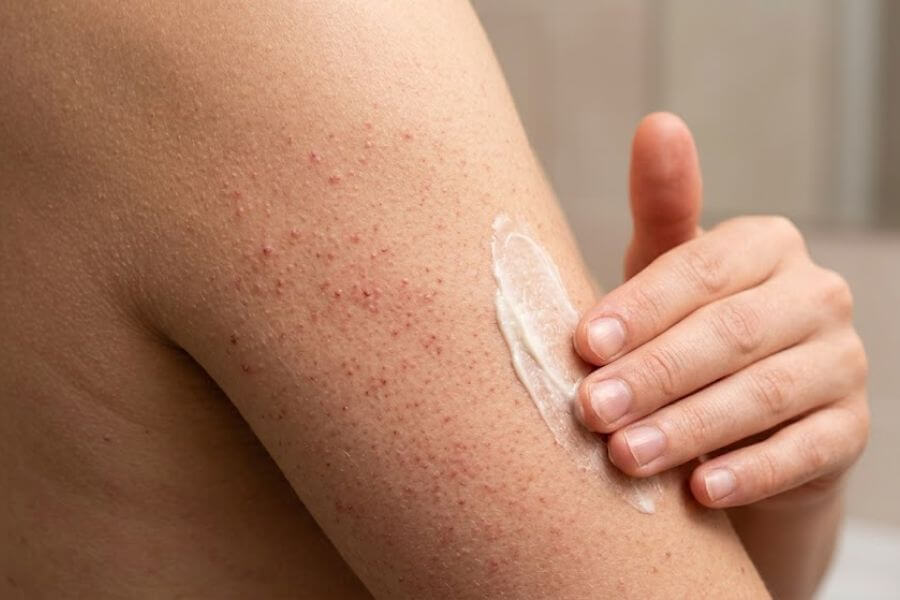
Keratosis pilaris, often called KP or chicken skin, is not actually acne at all, even though it looks like tiny red or white bumps. KP usually shows up on the backs of your arms and the fronts of your thighs. It happens when your body produces too much keratin, a natural protein that protects your skin. The extra keratin builds up inside your hair follicles, creating a hard, rough plug. It does not hurt, but it can feel like sandpaper.
Quick Comparison of Body Skin Issues
| Issue | Main Cause | Common Locations | How It Feels |
| Bacne | Excess oil, sweat, and thick skin plugging deep pores | Full back, shoulders | Painful, deep, swollen |
| Chest Acne | Friction, sweat pooling, and sensitive pores | Center of chest, collarbone | Red, surface-level pimples |
| Keratosis Pilaris | Hard keratin protein buildup in hair follicles | Back of arms, thighs | Rough, dry, sand-paper bumps |
Deep Dive into Back Acne (Bacne)
Your back is a prime target for breakouts because it is constantly covered by clothing and subjected to friction throughout the day. To clear up your back, you have to look at both your daily habits and the products you use in the shower.
The Role of Sweat and Exercise
When you work out or run around, your body produces sweat to cool you down. Sweat itself does not cause pimples, but when it mixes with the natural oils and dead cells on your skin, it forms a sticky layer. If you leave that layer on your skin for hours after a workout, bacteria will thrive in it.
Shower Order Matters
Believe it or not, the way you wash your hair could be causing your back acne. Many hair conditioners contain heavy oils and silicones designed to coat your hair strands and make them shiny. When you rinse conditioner out of your hair, it runs down your back. If you do not wash your back after rinsing your hair, that oily residue stays on your skin and clogs your pores.
Daily Habits for a Clear Back
Changing a few simple parts of your routine can make a massive difference in how much your back breaks out.
- Change your sheets weekly: Your bed sheets collect dead skin, oils, and drool every single night. Sleeping on dirty sheets rubs that grime right back into your skin.
- Wear loose clothing: Tight shirts rub against your skin, pushing dirt and oil deeper into your pores.
- Use a clean towel: Do not reuse the same bath towel for weeks. Damp towels hold onto bacteria, which you then rub onto your body the next time you dry off.
Deep Dive into Chest Acne
Because the skin on your chest is thin and sensitive, it requires a lighter touch than your back. Heavy products that work well on your back might irritate your chest and cause more redness.
The Friction Factor
Think about how often things touch your chest. Seatbelts, sports bras, necklace chains, and tight shirts all press against this area. This constant rubbing creates a type of acne caused by friction and pressure. The rubbing irritates the hair follicles, making it easier for oil to get trapped inside.
Fragrances and Detergents
Since chest skin is thin, it reacts quickly to irritating ingredients. The laundry detergent you use to wash your shirts could be the secret trigger for your chest pimples. Many detergents and fabric softeners are loaded with heavy perfumes that inflame sensitive skin.
Best Practices for Chest Care
Treating chest acne means focusing on calming the skin while keeping pores clear.
- Pick unscented laundry soap: Look for bottles that say fragrance-free or sensitive skin.
- Avoid heavy body washes: Stay away from thick, creamy body washes that smell like cupcakes or tropical fruits, as they often contain pore-clogging ingredients.
- Protect from the sun: Sunburns dry out your skin, which actually signals your oil glands to produce even more oil, making breakouts worse. Use a lightweight, oil-free sunscreen.
Deep Dive into Keratosis Pilaris (KP)
Keratosis pilaris needs a completely different strategy than regular acne. Since KP bumps are made of hard protein rather than oily bacteria, traditional acne treatments like benzoyl peroxide will not do much to clear them up. Instead, you need to focus on softening and dissolving the tough plugs.
Why You Must Never Scrub KP
When people feel rough bumps on their arms, their first instinct is often to grab a harsh scrub brush or a loofah and try to scrub the bumps away. This is the worst thing you can do. Scrubbing irritates the hair follicles, making them swell up and look much redder and angrier. You cannot scrub KP away; you have to dissolve it gently.
Chemical Exfoliation is Key
Instead of physical scrubbing, KP responds beautifully to chemical exfoliators. These are safe, mild acids that eat away the dead skin cells and hard protein plugs without hurting the healthy skin underneath.
Keeping KP Moisturized
KP gets much worse when your skin is dry, which is why many people notice their arms feel rougher during the cold winter months. Heavy, thick moisturizers that contain exfoliating ingredients are perfect for KP. You want to apply lotion immediately after showering while your skin is still damp to lock in as much moisture as possible.
The Ultimate Ingredient Guide for Body Breakouts
When you walk down the skincare aisle, the options can feel totally overwhelming. To save time and money, stop looking at the flashy marketing on the front of the bottles and start looking at the active ingredients listed on the back. These are the powerful tools that do the real work.
Salicylic Acid (Beta-Hydroxy Acid / BHA)
Salicylic acid is a superstar for oily skin and clogged pores. Most skincare ingredients can only dissolve in water, but salicylic acid can dissolve in oil. This means it can actually dive deep down into your oily pores to break up the sticky glue holding dead skin cells together. It clears out the plug from the inside out.
Benzoyl Peroxide
If your body acne consists of red, swollen, painful bumps, benzoyl peroxide is what you need. This ingredient is an antibacterial powerhouse. It goes into the pore and kills the bacteria responsible for acne. It also helps reduce redness and swelling very quickly.
Important Warning: Benzoyl peroxide will bleach fabric. If you apply it in the shower or use a lotion with this ingredient, make sure to rinse it off completely, or use white towels and white t-shirts so you do not ruin your favorite clothes.
Alpha-Hydroxy Acids (AHAs)
This group includes ingredients like glycolic acid and lactic acid. Unlike BHAs, these acids work on the very surface of your skin. They gently peel away the top layer of dead cells, making your skin look smoother and helping your other treatments sink in better. Lactic acid is especially great for KP because it sweeps away dead cells while also acting as a natural moisturizer.
Sulfur
Sulfur is an old-school ingredient that works incredibly well for sensitive, acne-prone skin. It draws out oil, dries up surface pimples, and calms down redness without causing the intense irritation that some other ingredients might trigger. It does have a slight scent, but it is excellent for clearing up chest breakouts.
Creating Your Daily Body Care Routine
Knowing the ingredients is only half the battle; you also need to know how to put them together into a simple routine. You do not need a ten-step process. A simple, consistent routine will always yield better results than a complicated one that you skip half the time.
The Shower Routine
Your shower is the foundation of your body skincare routine. Follow these steps every time you bathe:
- Step 1: Wash and rinse your hair completely. Tie your hair up off your back if it is long.
- Step 2: Apply your medicated body wash (like a salicylic acid or benzoyl peroxide wash) to your back and chest.
- Step 3: Let the wash sit on your skin for two to three minutes. This gives the ingredients time to actually work. If you rinse it off immediately, it will not do much.
- Step 4: Rinse thoroughly with lukewarm water. Hot water strips your skin of moisture and causes irritation.
The Post-Shower Routine
Once you step out of the shower, dry yourself gently with a clean towel by patting your skin rather than rubbing it. Now it is time to treat and hydrate.
- For Bacne and Chest Acne: Apply a lightweight, oil-free moisturizer. If you have severe acne, you can apply a thin layer of salicylic acid spray or benzoyl peroxide gel before your lotion.
- For Keratosis Pilaris: Apply a thick lotion containing lactic acid, glycolic acid, or urea to your arms and legs while they are still slightly damp.
Common Mistakes That Ruin Your Progress
Sometimes, you can buy all the right products but still experience breakouts because of small, hidden mistakes in your daily life. Let us look at the most common habits that keep body acne alive.
Popping and Picking Bumps
It is incredibly tempting to squeeze a pimple on your chest or pick at a bump on your arm, but you must resist the urge. When you squeeze a body pimple, you often pop the pore underneath the skin, spreading the bacteria sideways into your tissue. This creates a much larger, more painful bump and leaves behind dark scars that take months to fade.
Using Dirty Workout Gear
If you wear the same sports bra or gym shirt twice without washing it, you are putting a layer of old bacteria right back onto your skin. Even your gym equipment, like yoga mats or weight benches, can hold bacteria. Wipe down gear before you lay your back on it.
Over-treating Your Skin
More does not equal better when it comes to skincare. If you use a strong acne wash, a strong acne spray, and a strong acne lotion all at the same time, you will destroy your skin barrier. Your skin will become red, flaky, burning, and dry. When your skin gets too dry, it panics and makes even more oil, causing a massive wave of new breakouts.
Diet, Stress, and Your Body Skin
While topical products are the most important part of treating acne, your body is a connected system. How you take care of your inside can show up on your outside.
The Truth About Food and Pimples
Food does not directly cause acne, meaning eating one slice of pizza will not give you a pimple tomorrow. However, certain foods can increase inflammation in some bodies. High-sugar foods like soda, candy, and white bread cause rapid spikes in your blood sugar, which can trigger a burst of oil production. Drinking plenty of water helps your body flush out waste and keeps your skin cells healthy and hydrated.
How Stress Triggers Breakouts
When you are stressed out about school, sports, or social situations, your body releases a hormone called cortisol. Cortisol tells your oil glands to go into overdrive. More oil means more clogged pores. Finding simple ways to unwind, like listening to music, reading, or going for a walk, can actually help calm your skin down.
Frequently Asked Questions
Why do I get acne on my body but not on my face?
The skin on your body is different from the skin on your face. Your back and chest have larger pores and thicker skin, which can trap dead skin cells and oil more easily. Additionally, your body skin is constantly covered by clothing, exposed to sweat, and subjected to friction that your face never deals with. This creates a unique environment where body acne can thrive all on its own.
How long does it take to see results when treating body acne?
Skin cells take about twenty-eight days to completely renew themselves. Because body skin is thicker than face skin, it can take a bit longer to see major changes. You need to use a new routine consistently for at least four to six weeks before you will notice a real reduction in breakouts. Do not give up if your skin does not clear up in a single week.
Can I use my face acne products on my back and chest?
Yes, you can absolutely use face products on your body because the active ingredients work the same way. However, since the skin on your back is thicker, face products might not be strong enough to treat deep back acne. Also, face product bottles are usually small and expensive, so using them on large body areas can get very costly. It is usually better to buy products specifically packaged for the body.
Will sunbathing help dry up my body acne?
No, the sun does not cure acne. While a tan might temporarily hide the redness of your pimples, the sun’s UV rays actually damage your skin barrier and dry it out. To fix this dryness, your skin will respond by producing a flood of extra oil, leading to severe breakouts a few weeks later. Sun exposure also makes acne scars turn darker and last much longer.
Is keratosis pilaris contagious or dangerous?
Not at all. Keratosis pilaris is completely harmless and is not an infection, so you cannot catch it from anyone or spread it to anyone else. It is a genetic skin trait, meaning it just runs in some families. It is a cosmetic issue, meaning it only affects how the skin looks and feels, not your health. Many people find that it naturally improves or goes away on its own as they get older.