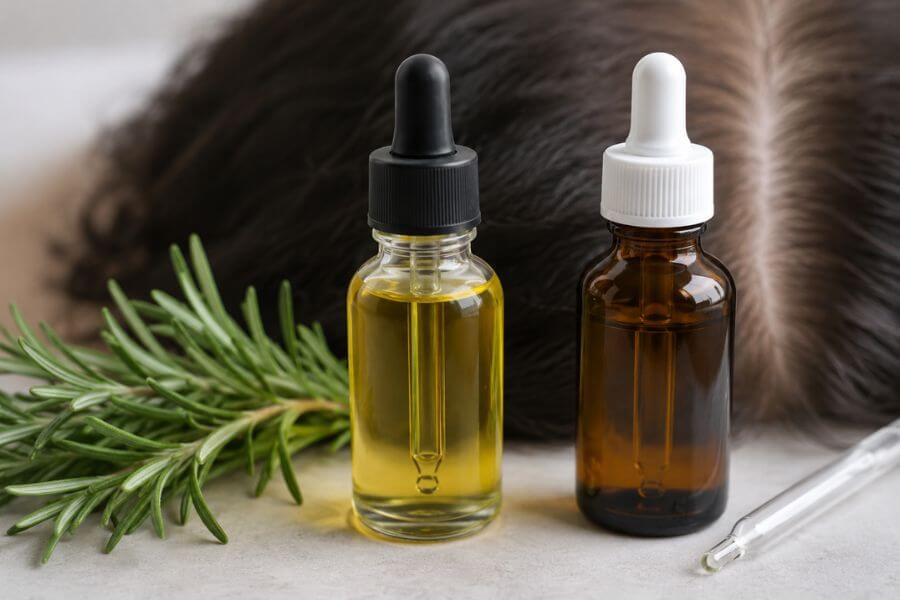
Finding out your hair is thinning can feel like a punch to the gut. You look in the mirror, notice a bit more scalp than usual, and suddenly your search history is filled with hair growth remedies. Two names pop up everywhere: a classic, lab-made chemical and a trendy, plant-based oil. One is a heavy-hitting medication that has been around for decades, while the other is a fragrant herb you might find in your kitchen.
But which one actually deserves a spot in your daily routine? Let us skip the marketing fluff and dive straight into what the science says about how these two options stack up against each other.
Key Takeaways
If you are short on time, here is the quick breakdown of what the research reveals about these two hair options:
- Equal Power in Studies: In a famous head-to-head clinical study, rosemary oil worked just as well as two percent minoxidil for hair growth after six months of daily use.
- Less Scalp Itching: People who used the plant-based oil experienced significantly less scalp irritation and itching compared to those using the chemical solution.
- Different Mechanisms: The chemical choice dilates blood vessels to feed hair roots, while the plant oil fights inflammation and blocks harmful hormones.
- Patience is Mandatory: Both treatments require at least four to six months of non-stop, consistent use before you will see new baby hairs.
- The Commitment Factor: If you stop using the chemical liquid, your newly grown hair will likely fall out within a few months, whereas the plant oil acts more like a long-term scalp health booster.
Understanding the Hair Growth Cycle
To figure out how these treatments work, you first need to understand how your hair grows. Your hair does not just grow non-stop. It moves through a continuous loop made of four distinct phases, and every single strand on your head is at a different stage of this loop right now.
The Growing Phase (Anagen)
This is the active part of the cycle. Your hair roots divide rapidly, adding to the hair shaft and pushing it up out of the skin. This stage usually lasts anywhere from two to seven years. The length of this phase determines how long your hair can actually grow. If your growing phase is short, your hair might never grow past your shoulders.
The Transition Phase (Catagen)
This is a short, two-week window where your hair stops growing. The hair follicle shrinks and detaches from the blood supply that feeds it. It is a resting period where the hair prepares to enter its final stages.
The Resting Phase (Telogen)
During this phase, which lasts around three months, your hair just sits there. It is no longer growing, but it is still attached to your scalp. Deep down in the skin, a new hair is starting to form beneath it.
The Shedding Phase (Exogen)
This is the grand finale of the loop. The old hair detaches completely and falls out, often when you brush your hair or wash it in the shower. It is completely normal to lose fifty to one hundred hairs a day because of this stage. Once the hair falls out, the follicle goes right back to the growing phase to start the whole process over again.
When you experience hair thinning, your growing phase gets shorter and shorter, while your resting phase gets longer. The hair follicles also shrink, producing thinner, weaker strands. Both treatments try to fix this issue, but they do it in very different ways.
What is Minoxidil and How Does It Work?
This treatment did not start out as a hair lotion. In the beginning, it was a pill used to treat high blood pressure. Patients taking the pill noticed a strange side effect: they started growing hair all over their bodies, including on their heads. Scientists realized they had stumbled upon something major, so they turned it into a liquid solution you apply directly to your scalp.
Opening Up Blood Vessels
The primary way this chemical works is by opening up the tiny blood vessels in your scalp. It is a vasodilator, meaning it widens your blood vessels so that blood can flow more freely. When you apply it to your scalp, it brings a rush of oxygen, vitamins, and nutrients directly to your starving hair roots.
Waking Up Sleepy Hair
Think of your thinning hair follicles as plants that have gone dormant during a dry season. This chemical acts like a sudden rainstorm. It forces hair follicles out of their long resting phase and pushes them back into the active growing phase. It also extends the length of the growing phase, allowing your hair to grow thicker and stay on your head for a longer period of time.
The Biological Engine
Inside your scalp, the chemical needs to be activated by an enzyme called sulfotransferase. This enzyme turns the liquid into its active form. Some people naturally have more of this enzyme than others. If you have a lot of it, the treatment will work incredibly well for you. If your body does not make much of this enzyme, you might not see great results.
What is Rosemary Oil and How Does It Work?
This plant-based option comes from the leaves of the common rosemary shrub. It is a concentrated liquid packed with powerful plant chemicals that do wonders for your skin and hair roots. People have used it for hundreds of years to improve health, but modern science is finally uncovering why it actually works.
Fusing Science with Nature
The secret behind this plant oil lies in its unique chemical makeup. It is loaded with antioxidants, anti-inflammatory compounds, and antimicrobial agents. When you put it on your scalp, it tackles hair loss from several different angles at once instead of just focusing on blood flow.
Blocking the Hair-Loss Hormone
The biggest reason people lose their hair is a hormone called dihydrotestosterone, or DHT for short. This hormone binds to your hair follicles and slowly suffocates them until they stop producing hair. This plant oil contains carnosic acid, a compound that has been shown to block this hormone from damaging your hair roots. It acts like a natural shield for your scalp.
Calming Scalp Inflammation
An itchy, inflamed scalp is a major enemy of hair growth. If your scalp is red, flaky, or irritated, your hair roots cannot function properly. The plant oil calms down this inflammation, killing off bad bacteria and fungi that live on your skin. By cleaning up the environment, it creates the perfect foundation for healthy hair to grow.
The Famous Head-to-Head Study
For a long time, fans of natural remedies claimed that plant oils could regrow hair, but they did not have the hard data to prove it. That all changed in 2015 when a team of researchers decided to pit the plant oil directly against the leading hair medication.
How the Experiment Worked
The scientists gathered one hundred men who were all dealing with genetic hair loss. They split the men into two equal groups. The first group used rosemary oil on their scalps every day for six months. The second group used a two percent minoxidil solution every day for the same six-month period. No one knew which treatment they were getting to keep the results totally fair.
The Six-Month Results
At the three-month mark, neither group showed much improvement. This proved that hair growth takes a long time, no matter what you use. But when the six-month mark arrived, the results surprised a lot of critics. Both groups showed a significant increase in their hair count. The plant oil had performed just as well as the commercial medication.
The Side Effect Showdown
While both treatments successfully grew new hair, there was a massive difference in how the patients felt. The group using the chemical solution complained a lot about scalp itching, dryness, and flaking. The group using the plant oil experienced way less irritation. Their scalps were much happier throughout the process.
Side-by-Side Comparison
To help you visualize how these two options stack up against each other, let us look at their main differences across several key categories.
| Feature | Minoxidil | Rosemary Oil |
| Origin | Synthetic chemical | Plant extract |
| Main Function | Increases blood flow | Blocks DHT and reduces inflammation |
| Time to See Results | Four to six months | Four to six months |
| Scalp Irritation | Common (itching, flaking, redness) | Rare (usually well-tolerated) |
| Smell | Medical and chemical | Herbal and fresh |
| Long-Term Dependency | High (hair falls out if you stop) | Low (improves overall scalp health) |
| Availability | Over the counter at pharmacies | Health stores and online shops |
Pros and Cons of Minoxidil
Like any medication, this chemical option comes with its own unique set of advantages and disadvantages. It is important to look at both sides before deciding to put it on your head twice a day.
The Good Side
The biggest benefit is predictability. Because it has been studied for decades, we know exactly what it can do. It is FDA-approved, meaning it has passed strict safety and effectiveness tests. It is incredibly effective at reviving hairs that are on the verge of disappearing completely. It is also very easy to buy, as every major pharmacy sells it in either a liquid or a foam version.
The Bad Side
The biggest downside is the commitment. This treatment is a lifetime deal. If you stop using it, the blood vessels will shrink back down, the hair follicles will go back to sleep, and all the new hair you grew will shed within a few months. You are essentially renting your hair, not owning it.
Another downside is the dreaded shedding phase. When you first start using it, it pushes all your resting hairs out at once to make room for new ones. This means your hair might actually look thinner during the first month of use, which can scare a lot of people into quitting too early.
Pros and Cons of Rosemary Oil
If you are leaning toward the natural route, you should consider the benefits and drawbacks of using a botanical oil on your hair roots.
The Good Side
The main benefit is that it supports your hair without causing harsh side effects. It does not contain synthetic chemicals, artificial fragrances, or parabens. It helps moisturize a dry scalp instead of stripping it of its natural oils. It also offers a beautiful, refreshing scent that can boost your mood during your morning routine. Plus, you do not have to worry about your hair falling out in massive clumps if you miss a few days of application.
The Bad Side
The main drawback is the effort required to use it correctly. You cannot just pour pure essential oil directly onto your scalp because it is way too strong and will cause a burning sensation. You must always mix it with a carrier oil, like jojoba or almond oil, before using it. This mixing process can be messy and time-consuming.
It also leaves your hair looking greasy. If you have very fine hair, applying oil to your scalp means you will likely need to wash your hair more frequently, which might not fit into your current lifestyle.
How to Apply Each Treatment Correctly
Applying these treatments the right way is just as important as choosing the right product. If you do it wrong, you will either waste your money or irritate your skin.
Applying the Chemical Solution
If you choose the chemical route, start with a dry scalp. Use the dropper to apply one milliliter of the liquid to the areas of your scalp that are thinning. Use your fingers to rub it in gently. If you are using the foam version, use half a capful. Wash your hands thoroughly with soap immediately after applying it so you do not accidentally transfer it to your face, as it can cause unwanted facial hair growth. Do this twice a day, every single day.
Applying the Plant Oil Mixture
If you choose the plant oil, you need to create a safe blend. Take a clean bottle and pour in two tablespoons of a carrier oil, like jojoba oil or argan oil. Add five drops of pure rosemary essential oil to the bottle and shake it up well.
Part your hair and apply a few drops of this mixture directly to your scalp. Use your fingertips to massage your scalp for five minutes. This massage action helps stimulate blood flow and ensures the oil reaches your hair roots. You can leave it on overnight or wash it out after twenty minutes if you dislike the oily look. Repeat this three to four times a week.
Safety and Precautions
While both options are generally safe for most people, you still need to be smart and cautious when starting a new hair routine.
Chemical Solution Warning Signs
This medication can sometimes enter your bloodstream through your scalp. If this happens, you might feel dizzy, experience a rapid heartbeat, or notice swelling in your hands and feet. If you notice any of these symptoms, stop using it immediately and talk to a doctor. Women should also be careful to use the correct strength, as the stronger five percent version is sometimes only recommended for men depending on the brand.
Plant Oil Warning Signs
Natural does not mean risk-free. Some people are allergic to specific plants. Before you put the oil blend all over your head, perform a patch test. Rub a single drop of the mixed oil onto the inside of your wrist or your inner elbow. Wait twenty-four hours. If your skin turns red, starts itching, or develops bumps, your body does not like it, and you should avoid using it on your head. Also, be very careful not to get it in your eyes, as it burns intensely.
Making Your Ultimate Decision
Choosing between these two options comes down to your personal values, your lifestyle, and how your body reacts to products.
Choosing the Chemical Route
You should go with the medication if you want a proven, scientific treatment that has decades of data backing it up. If you do not mind committing to a product for the rest of your life and you want a non-greasy formula that dries quickly, the foam or liquid version is likely your best bet.
Choosing the Plant Route
You should go with the plant oil if you prefer clean beauty and want to avoid synthetic chemicals. If you already suffer from a dry, itchy scalp or dandruff, this oil will help soothe your skin while boosting hair growth. It is also ideal if you want a flexible routine that you can stop and start without the fear of sudden, massive hair shedding.
Summary Comparison Matrix
Let us look at a final summary to see how these two hair growth contenders score across different lifestyle and health metrics.
| Performance Metric | Minoxidil | Rosemary Oil |
| Scientific Backing | Excellent (clinical trials spanning decades) | Good (fewer trials but strong recent data) |
| Ease of Daily Use | High (dries fast, fits into busy mornings) | Medium (requires mixing and washing out) |
| Affordability | Medium (costs add up over a lifetime) | High (bottles last a very long time) |
| Scalp Health Benefits | Low (only focuses on hair growth) | High (fights dandruff, fungus, and dryness) |
| Suitability for Sensitive Skin | Low (often causes itching and flaking) | High (calms and protects sensitive skin) |
Frequently Asked Questions
Can I mix rosemary oil and minoxidil together for faster results?
You should avoid mixing them directly in the same bottle because the oil can alter the chemical makeup of the medication, making it less effective. However, you can use them at different times of the day. For example, you could apply the chemical foam in the morning because it dries clear, and then use the plant oil blend as a nourishing treatment a few nights a week before washing your hair.
Will rosemary oil cause a shedding phase like minoxidil does?
Generally, the plant oil does not cause the heavy, scary shedding phase that people experience with the medication. The chemical option works by rapidly forcing old hairs out to jumpstart the growth cycle, which causes a temporary wave of hair loss. The plant oil works more gradually by improving scalp health and blocking hormones, so the transition is much smoother and less noticeable.
How long do I have to wait before I see new hair growth?
Whether you choose the chemical solution or the plant oil, you need to pack your patience. Hair grows very slowly, usually only about half an inch per month. You will need to use your chosen treatment consistently for at least four to six months before you see noticeable results. If you stop after a few weeks because you do not see a change, you will miss out on the benefits.
Is rosemary oil safe to use every single day?
Yes, it is safe to use daily as long as you dilute it properly with a carrier oil. Applying pure essential oil to your scalp every day will cause chemical burns and severe irritation. If you create a gentle blend with jojoba or oil, your scalp will handle it daily just fine. However, if your hair starts looking too greasy, you can drop down to three times a week and still get great results.